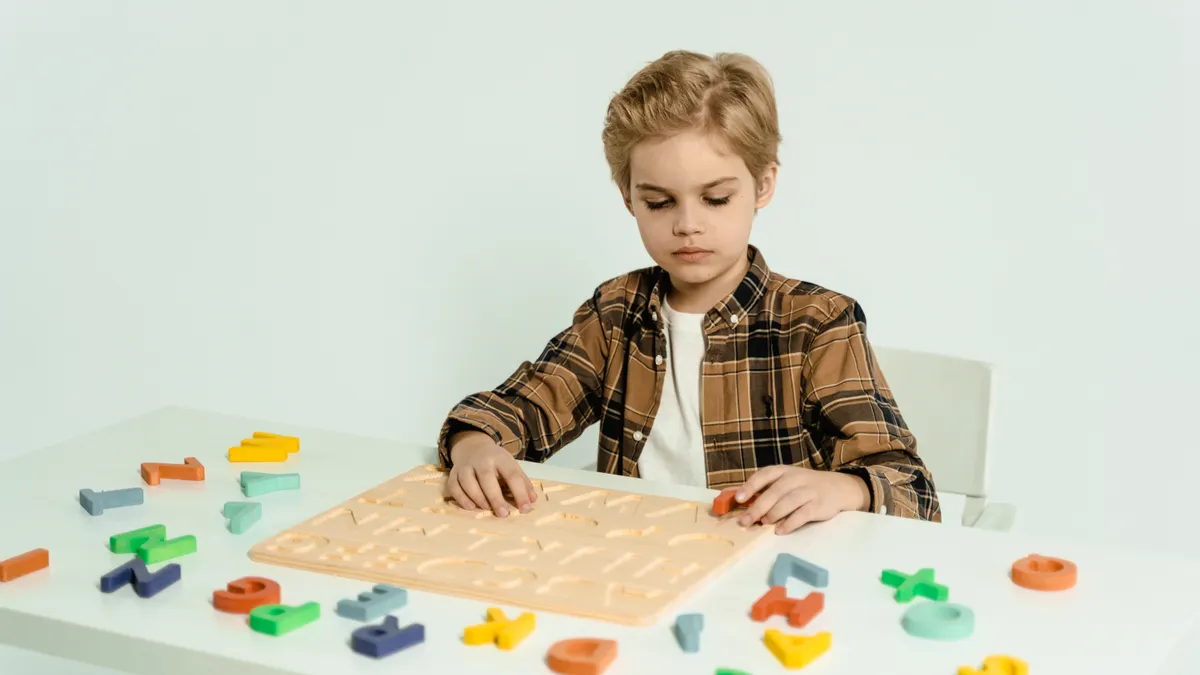
Last updated: October 27, 2026
Quick Answer: Most educational toddler toys work best when they are simple, durable, and matched to a child’s current stage; in practice, that often means large blocks, chunky puzzles, nesting toys, and pretend-play sets for ages 1 to 3. Educational toddler toys work best when they match a child’s stage, not just a label on the box. The right toy gives a 1-, 2-, or 3-year-old a chance to sort, stack, fit, pour, push, name, imitate, and repeat.
Key Takeaways
- The best toddler toy is often simple: open-ended, durable, and sized for small hands.
- A toy is educational when it supports a real skill such as matching, counting, cause and effect, language, or fine-motor control.
- Age labels matter less than the child’s current abilities, supervision level, and safety risks.
- Overly busy toys with lights, sounds, and one correct answer often teach less than plain blocks, puzzles, and pretend-play sets.
- The most useful toy often changes every 3 to 6 months as attention span, hand control, and language grow.
- Safe toddler play depends on choking-size rules, stable construction, non-toxic materials, and age-appropriate design.
Educational toddler toys are tools for practice, not magic lessons. A good one helps a toddler do something slightly harder than they could do yesterday: place a shape, name an animal, open a latch, feed a doll, or fit one object into another. The most useful toys usually look plain to adults and feel irresistible to a 2-year-old. Because of that, the best educational toddler toys are often the ones that invite repetition rather than the ones that impress in the box.
What makes a toddler toy “educational”?
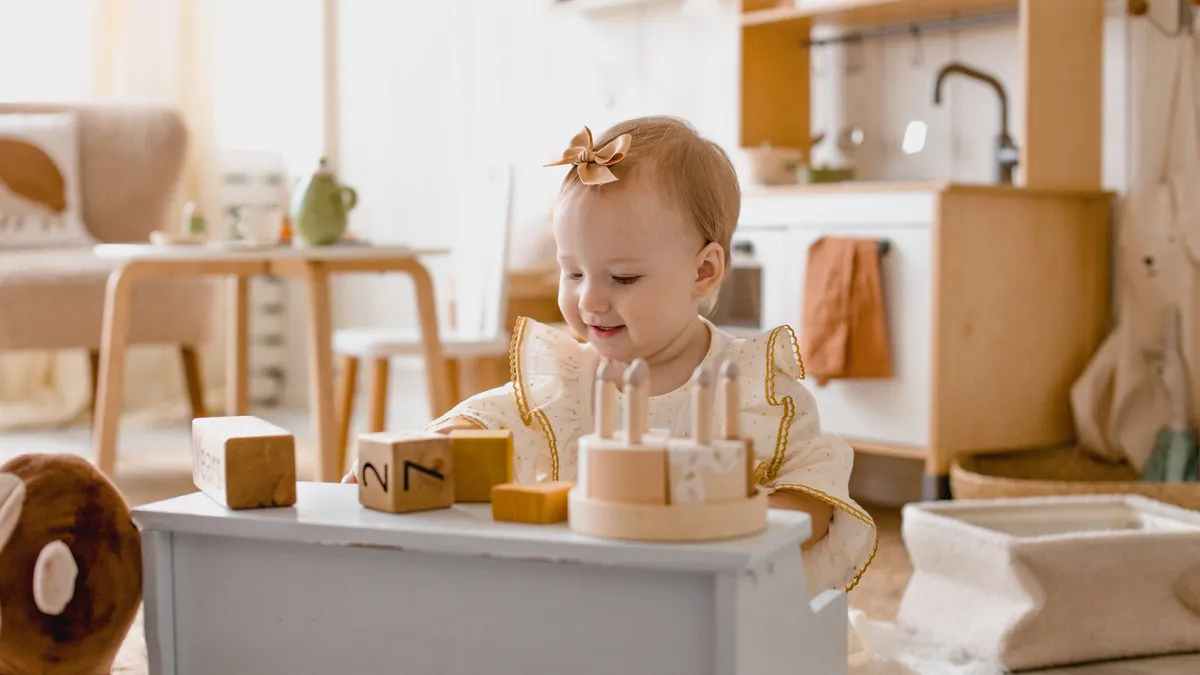
An educational toddler toy teaches through repeated action, not through a lecture or a screen. The skill can be language, coordination, memory, sorting, pretend play, early math, or problem-solving, but the toy should invite the child to act.
A toy counts as educational when it does at least one of these things well:
- Builds fine motor control: stacking rings, peg boards, chunky puzzles, shape sorters
- Supports language: naming cards, animal figures, pretend food, doll play
- Teaches cause and effect: pop-up toys, ramps, simple pull-along toys
- Encourages early logic: matching pairs, nesting cups, basic sorting sets
- Strengthens imitation and social play: tea sets, tool sets, doctor kits
- Develops spatial thinking: blocks, interlocking bricks, magnetic tiles used at toddler scale
The phrase “educational” gets stretched too far in toy marketing. A flashing toy that says the alphabet can be fine, but it is not automatically better than a set of wooden blocks. In many cases, the plain toy does more because it lets the toddler decide the play. That is one reason educational toddler toys are often less flashy than people expect.
The better question is not “Does it teach letters?” It is “What will a toddler actually do with it for 10 minutes, then again tomorrow?” If the answer is “press one button and wait for sound,” the toy may entertain without building much. If the answer is “stack, knock down, rebuild, and name colors,” the toy usually earns its place.
Safety belongs in this category too. Safety guidance treats toys with small parts differently for children under 3, because choking is a real risk, and parents should check the current guidance or consult a pediatrician or other qualified professional if they are unsure about a specific toy. The Consumer Product Safety Commission’s small-parts standard and toy guidance matter here more than any marketing claim. The National Association for the Education of Young Children also emphasizes play that lets children explore, repeat, and choose; that is the kind of play most educational toys should support.
Source: U.S. Consumer Product Safety Commission toy safety guidance and ASTM F963 toy safety standard; NAEYC guidance on play-based learning.
What this means in practice: an educational toy is not the one with the longest feature list. It is the one that gives the child the most chances to think, move, name, and repeat.
What should I buy for a 1-, 2-, or 3-year-old?
The right toy depends on the age band and the child’s current skill, not the birthday alone. A 12-month-old needs different play than a 30-month-old, and a 3-year-old may outgrow toys that were perfect six months earlier. For educational toddler toys, the right match changes quickly as the child’s coordination and language grow.
12 to 18 months
At this stage, toys are often most useful when they are large, sturdy, and easy to grasp. Good choices include:
- Large stacking cups
- Simple nesting bowls
- Big wooden blocks
- Soft animal figures
- Push-and-pull toys
- Shape sorters with oversized pieces
A toy for this age should survive mouthing, dropping, and rough handling. It should not depend on precise finger control. The goal is repetition: put in, take out, push, stack, knock over. That cycle builds hand strength and early cause-and-effect understanding.
18 to 24 months
This is the age for simple problem-solving. Good options include:
- Chunky peg puzzles with knobs
- Basic color sorting toys
- Pretend food sets with large parts
- Simple vehicles
- Tool benches with oversized pieces
- Board books paired with toy figures
A child in this range may begin naming objects and imitating adults more intentionally. Toys that support vocabulary and pretend play become much more useful. A plastic apple and banana can do more for language than a toy that only plays music. As the child’s imitation grows, educational toddler toys that invite naming and sorting often become more engaging.
2 to 3 years
This is the sweet spot for toys that combine imagination and early logic. Good choices include:
- More complex puzzles
- Magnets used with adult supervision
- Duplo-style bricks or similar large building systems
- Dress-up pieces
- Doctor kits
- Counting toys with large, safe pieces
A 2- or 3-year-old often wants “real” tasks. They may enjoy feeding a doll, parking cars in a row, or placing animals in and out of a barn. Toys that allow pretend routines often hold attention longer than toys with one fixed answer.
A useful rule of thumb
If a toy requires a task a child cannot yet perform at all, it becomes frustrating. If it is too easy, it becomes background noise. The fit often sits just above the child’s current level, with enough success built in that they can try again without adult rescue every 30 seconds.
Generic advice gets this wrong by saying older is always better. That is not true. A toddler who is still mouthing everything may be safest with larger, simpler toys even if the packaging says “12 months+.” A child who can already sort and stack may need something more challenging, even if it is sold as a beginner toy.
The toy aisle rewards broad labels. The home needs better judgment.
Which types of educational toddler toys teach the most?
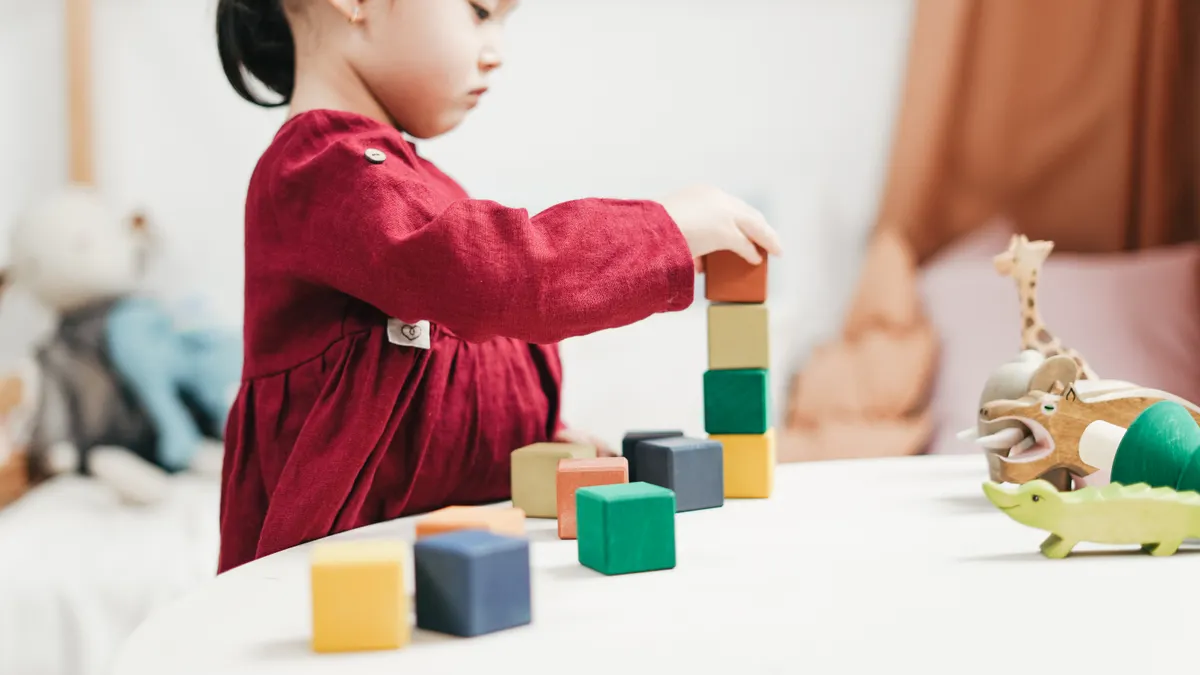
The most useful toddler toys are the ones that can be played with in multiple ways. That usually means open-ended toys, not toys with one correct button sequence. When families want educational toddler toys that last, flexibility matters as much as the label.
Building toys
Blocks, large interlocking bricks, and magnetic tiles support balance, spatial thinking, and early planning. They also tolerate repetition well, which matters because toddlers learn through doing the same thing many times.
A good building set does not need instructions for every play session. If a toy can become a tower, a road, a house, or a zoo fence, it usually has more long-term value than a toy that only assembles one way.
Puzzles and shape sorters
These teach matching, visual discrimination, and hand-eye coordination. For toddlers, the best puzzle pieces are often thick, large, and easy to grip. Knob puzzles are often better than flat ones for younger hands.
Shape sorters can be excellent, but they should not be so difficult that the adult ends up doing the toy for the child. If the toy demands constant correction, it becomes a parent activity instead of a toddler activity.
Pretend-play sets
Toy kitchens, doctor kits, tool sets, dolls, and animal figures teach language, social scripts, and symbolic thinking. Pretend play is one of the most powerful educational formats because it turns real-life routines into practice.
A toddler pouring tea into small cups is not just “playing house.” They are rehearsing sequencing, social language, and fine-motor control. A doll in a bed can lead to naming body parts, talking about sleep, and acting out comfort routines.
Art and sensory toys
Crayons, chunky chalk, dough, water-safe play materials, and simple stamping tools are educational when used with supervision. They build hand strength, pressure control, and creativity.
The key is scale and cleanup. Toddlers need materials that are easy to grasp and hard to swallow. Tiny beads may look fun on a shelf and become a hazard on the floor.
Language toys
Picture cards, animal figures, board books, and simple matching games can support vocabulary when adults use them with the child. A toy does not teach language by itself; it creates a reason to talk.
A set of farm animals is often more valuable than a toy that recites the alphabet because it can support naming, sound imitation, grouping, and story building. One toy can produce many conversations.
Ride-on and movement toys
Push toys, ride-ons, and balls help with balance, coordination, and spatial awareness. These matter more than many parents expect. Gross motor play supports regulation, confidence, and body control, which affects how a toddler sits, reaches, and focuses later.
The broad pattern is simple: toys that can be used in 5 different ways usually beat toys with one fixed script. That does not mean every electronic toy is bad. It means the more a toy does for the child, the less the child has to do.
What are the safest educational toys for toddlers?
The safest educational toddler toy is large enough, stable enough, and simple enough to reduce avoidable risk. Safety is not a bonus feature here; it is part of the toy’s quality.
The main safety checks are practical:
- No small parts for children under 3 unless the toy is clearly meant for an older age and kept away from younger siblings
- No loose magnets for toddlers
- No sharp edges, splintering wood, or fragile seams
- No long cords, strings, or loops that create entanglement risk
- No heavy items that can tip or crush small hands
- Non-toxic materials and finishes from a trustworthy manufacturer
- Sound levels that do not make the toy unbearable to use indoors
The U.S. Consumer Product Safety Commission advises checking age grading, choking hazards, and toy condition regularly. ASTM F963 is the main toy safety standard in the United States and is widely referenced in toy manufacturing. For parents, that means the label matters, but inspection matters too. A toy that was safe last month can become unsafe if it cracks, sheds pieces, or loses a battery cover.
Battery compartments deserve special attention. A button battery is a serious hazard if a child can reach it, and loose batteries belong nowhere near a toddler’s play area. Toy storage matters just as much as toy selection: if mixed-age siblings share a room, the safest plan is to separate small toys from toddler-accessible bins.
Soft toys can also be risky if they have glued-on eyes, beads, or stitched parts that come loose. Fabric toys should be sturdy enough to withstand aggressive chewing and tugging.
One common mistake is buying a toy “for learning” and ignoring how the child will use it when tired, excited, or unsupervised for 2 minutes. That is usually when the risk appears. Educational value never excuses weak construction.
What gets left out of most toy guides?
Most toy guides miss the real trade-off: the most educational toy is not always the most exciting one, and the most exciting toy is not always the one that teaches most. Once that is clear, it becomes easier to choose educational toddler toys that actually get used.
That matters because toddlers often love novelty. A toy that makes noise can hold attention immediately, while a plain set of blocks may look boring on a store shelf. But novelty fades fast. Reusable play lasts longer.
Three things generic guides usually leave out:
1) The adult role
A toddler toy often becomes educational only when an adult names objects, asks a simple question, or models a move. A shape sorter is not magic. It becomes much more useful when someone says, “Where does the circle go?” and waits.
This does not mean the adult needs to “teach” all the time. It means toddlers benefit when the toy becomes part of back-and-forth interaction. That is why books plus figures, pretend food plus narration, and blocks plus a simple challenge often work so well.
2) Attention span changes fast
A toy that works at 15 months may be ignored at 27 months. That is not failure; it is development. The toy’s job is to match the current stage, then move on.
Parents sometimes overbuy because a toy looks “long-lasting.” In reality, the most useful collections are often small and rotating. A few good toys used often beat a roomful of options used once.
3) Boredom is not always bad
A toy that leaves room for invention can look less “educational” than one with lots of features, but it may be doing more work. When a toddler has to create the play, they practice decision-making, sequencing, and flexibility.
That is why open-ended toys often matter more than labeled learning toys. A toy with 12 flashing responses may entertain, but a toy with 2 parts that can become 20 things teaches more by demanding imagination.
This section matters because it changes the buying question. The real question is not “What toy claims to teach?” It is “What kind of play will happen when a tired toddler meets this object on a random Tuesday?”
Which educational toddler toys are not worth the money?
Toys are not worth the money when they do the child’s thinking, break quickly, or offer a single experience that gets old in 5 minutes. Educational toddler toys should create repeated play, not a one-time demo.
The worst offenders usually fall into these groups:
Overly specific electronic toys
A toy that only rewards a single button press with a sound or song often gives little room for creativity. It can be entertaining, but the educational value is limited if the child cannot change the outcome.
These toys also tend to be battery-dependent, noisy, and harder to ignore during adult conversation or sibling play.
Toys with too many tiny accessories
A set that comes with 18 mini parts may look rich on the shelf. For toddlers, it often turns into lost parts, frustration, or choking risk. The parent then spends more time finding pieces than the child spends learning.
“Smart” toys that replace interaction
Some products promise to teach letters, numbers, or languages on their own. But toddlers learn best through human exchange, repetition, and concrete objects. A screen-like toy may have a place, but it should not crowd out real play.
Toys that are too advanced
A toy meant for older preschoolers can feel like failure to a toddler. If the game requires precise counting, fine visual discrimination, or detailed following of instructions, it may be beyond the current stage.
Toys that are all packaging
Some toys look beautiful in photos and then disappoint in use. Thin plastic, awkward parts, and one-use features often mean the toy will not survive repeated toddler handling. A good toy needs to survive being dropped, stepped on, carried in a stroller, and returned to the floor 40 times.
There is also a simpler test: if a toy needs adults to keep inventing reasons to use it, the toy may not be doing enough on its own. That does not mean it is bad. It means the buyer should know what they are paying for.
The wrong toy is usually one of three things: too fragile, too scripted, or too small. The right toy is usually durable, flexible, and easy to understand without instruction.
How do I choose the right educational toddler toy in 5 minutes?
The right toy is the one that fits the child’s current skill, the play space, and the supervision level. A fast choice gets easier if the buyer checks five things in order.
1) Start with the skill
Ask: what is the child practicing now?
- Grasping and dropping
- Stacking and knocking down
- Naming and pointing
- Sorting and matching
- Pretending and talking
- Pushing, pulling, climbing, or balancing
A toy should match one of those skills, not just the category on the package.
2) Check the piece size
If the toy has removable parts, ask whether any part is small enough to create a choking risk for a child under 3. If the answer is uncertain, the toy should stay out of reach or be skipped.
3) Look for open-ended play
Can the toy be used more than one way? Can it still be interesting after the first day? If yes, it is more likely to be worth keeping.
4) Judge the cleanup burden
A toy that creates 30 tiny parts is not just a toy; it is a family logistics problem. For toddlers, simpler systems often win because they actually get used.
5) Check the sound and screen level
If the toy is loud enough to dominate a room, it may be better as a novelty than as a daily educational toy. If it depends on a screen or constant stimulation, ask what the child learns without the electronics.
A good purchase often follows a simple pattern: one skill, one material, one durable form. A set of large blocks. A basket of animal figures. A chunky puzzle. A board book with matching toys. Those combinations may look plain, but they are often the toys that stay in use.
The best summary is practical: buy less, buy larger, and buy for the play you want to see tomorrow, not the photo on the package.
How can I use educational toddler toys better at home?
Educational toddler toys work best when the adult treats them as conversation starters and repeatable tools, not as one-time teaching devices. A toy is more useful when it appears in a routine.
A few simple habits make a difference:
- Put 6 to 10 toys in reach, not 40
- Rotate some toys every 1 to 2 weeks if attention drops
- Pair a toy with language: name colors, actions, animals, sizes
- Leave room for repetition
- Sit nearby without taking over the play
- Use the same toy in new ways: stack it, sort it, hide it, count it
This is where many households get better results than the toy aisle suggests. A basket of blocks can support towers one day, roads the next day, and pretend food stalls a week later. A set of toy animals can become a vocabulary game, a matching game, or a bedtime story scene.
For a child who has limited language, the adult’s narration matters. Short phrases work better than long lessons. “Big block.” “Red one.” “Up.” “Again.” Those phrases pair action with words and keep the pace manageable.
For a child who gets frustrated easily, the toy should allow success in small steps. A puzzle with 3 large pieces may be perfect; a 12-piece set may be too much. Frustration can be useful in small amounts, but repeated failure turns play into a battle.
The home setting matters too. A toy used on the floor near other children is different from the same toy used in a quiet corner. Noise, space, sibling access, and storage all change how educational a toy can be in practice.
The best educational toy is not the one with the biggest claim. It is the one the child returns to, because return is where learning happens.
What should parents remember before buying?
The right educational toddler toy is age-appropriate, safe, durable, and open enough to grow with the child for a while. It should support action, not replace it.
The strongest choices are usually the least dramatic:
- large blocks
- chunky puzzles
- nesting and sorting toys
- pretend-play sets
- books paired with figures
- simple movement toys
The weakest choices are often the most overpromised:
- noisy toys with one narrow function
- tiny accessory-heavy sets
- fragile items
- toys that require advanced coordination
- products that can only be used one way
The honest answer is that no toy teaches everything. A toddler learns best from a mix of materials, repetition, movement, and conversation. One toy can support that, but it cannot replace it.
A parent shopping for educational toddler toys should look for the toy that invites the most real play per dollar, the fewest safety headaches, and the widest range of uses over the next few months. That is what earns a place on the floor.
Drafted with AI; not yet reviewed by a person.