Last updated: October 27, 2026
Quick answer: choose one simple sensory toy, keep it age-appropriate, and check it for small parts before every use. In How to Choose Safe Sensory Toys for Toddlers, the safest options are usually the ones with one strong sensory feature and sturdy construction.
Key Takeaways
- Safe sensory toys fit a toddler’s mouth, grip, hearing, and attention span.
- Check for loose parts, small openings, and anything that detaches in 30 seconds.
- The calmest toys give one low-intensity sensation at a time.
- A toy is too messy when cleanup or the mess itself creates a safety problem.
Safe sensory toys for toddlers are the ones that match a toddler’s age, keep small parts out of reach, stay quiet enough for the room, and do not create choking, pinching, or overload risks. The best choice is often simple: a toy with one strong sensory feature, sturdy construction, and no loose add-ons that can fit through a toilet-paper roll-sized opening.
What makes a sensory toy safe enough for a toddler?
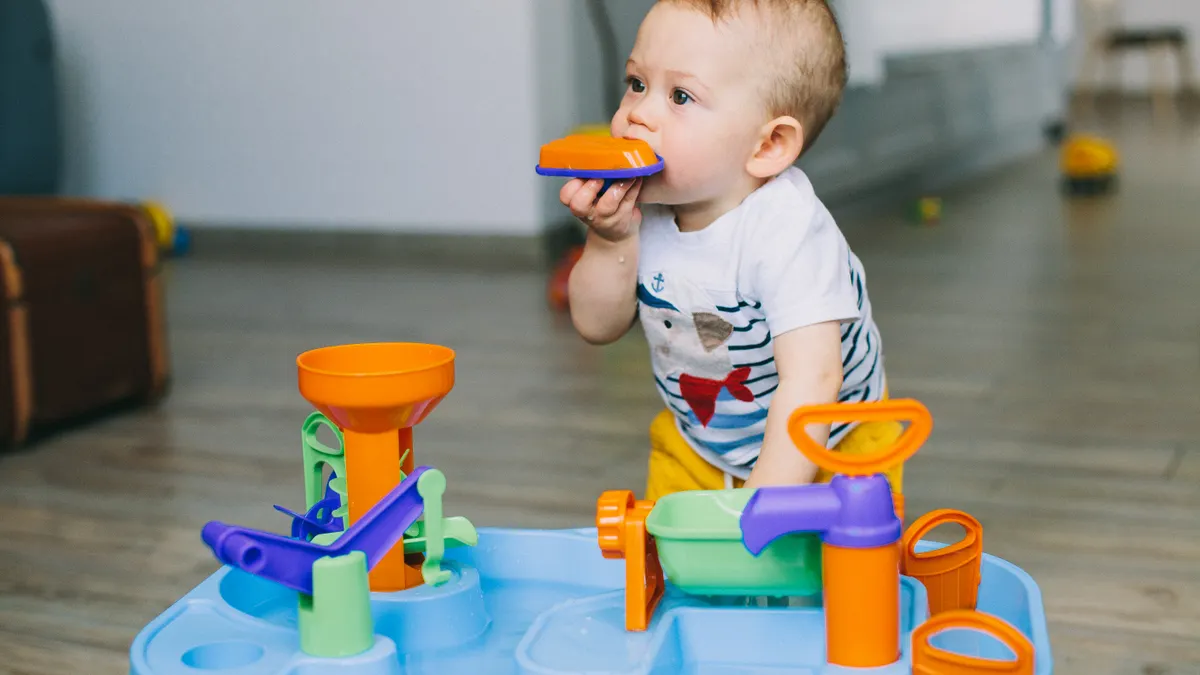
A sensory toy is safe when it fits the child’s mouth, grip, hearing, and attention span instead of fighting them. That means no detachable parts smaller than 1.25 inches in diameter for toddlers who still mouth toys, no sharp edges, no cords longer than about 7 inches that can wrap around the neck, and no sound or light that turns play into a stressor.
The first filter is age fit. A toy labeled for 3+ is not automatically unsafe, but it often includes tiny components, magnets, or more intense effects than a 1- or 2-year-old can handle. I would treat age labeling as a floor, not a suggestion, and if the packaging says “for ages 3 and up,” it usually means a toddler under 3 should not have unsupervised access. If you are unsure, consult a pediatrician or child-safety professional. The U.S. Consumer Product Safety Commission also advises using age labels and warning information as part of toy selection.
The next filter is how the toy behaves in a real room. A crinkle book may be fine for 10 minutes in a living room and miserable in a car seat. A light-up wand may be interesting for a few minutes and then become too stimulating. A sensory toy that works only when the noise is turned up, the room is dark, or the toy is held a certain way is less forgiving than a simple squeeze ball or textured teether.
One useful standard to know is the ASTM F963 toy safety standard, which covers things like small parts, sharp points, and other mechanical hazards. The CE mark and EN 71 standard are common in many markets too. Packaging that references a real toy-safety standard is worth more than vague claims like “safe for kids.” The CPSC and ASTM both publish guidance that helps buyers compare toys beyond marketing language.
Who this is not for: a toddler who still puts every object in the mouth, throws things hard enough to break them, or startles easily at sound may need the plainest option first. A flashing, noisy, multi-part toy is not the right starting point for that child.
How do I check sensory toys for choking, squeezing, and swallowing risks?
I check the toy for loose parts, small openings, and anything that can detach in under 30 seconds of rough handling. The easiest test is physical: tug, twist, shake, and press before a toddler ever sees it.
Use this quick screening routine:
- Pick up the toy and look for seams, snap-on eyes, beads, buttons, or caps that could come off with a firm pull.
- Check each part against a toilet-paper roll opening or a small-parts gauge if you have one; anything that fits through that opening is a warning sign for younger toddlers.
- Squeeze the toy at the corners, edges, and joins for 10 to 15 seconds to see whether stuffing, gel, or pellets shift into a thin spot.
- Pull on straps, loops, rings, and cords. If any cord is long enough to dangle near the neck, skip the toy for unsupervised play.
- Shake the toy near your ear. If you hear rattling from inside and cannot tell whether it is sealed, assume the contents may be accessible.
The risk is not only the size of the part. A soft toy with a hidden zipper pull, a silicone toy with a thin tail, or a rattle with a weak seam can become a swallowing hazard after a single drop on the floor. Sensory balls are common examples, and the safest ones are usually molded in one piece or built with thick walls and no removable inserts. A ball with holes, plugs, or decorative add-ons deserves a closer look.
This is also where fidget toys need extra skepticism. Many are made for older hands and older attention spans. Spinners, clickers, and chain-style fidgets often look harmless but rely on tiny moving parts. For toddlers, movement plus small components is the wrong mix.
A plain rule works well: if the toy can be separated into three or more parts without tools, it is probably too complicated for independent toddler play. That is not a law of nature, but it is a useful home rule when the packaging is vague.
Which textures, sounds, and lights are calming instead of too much?
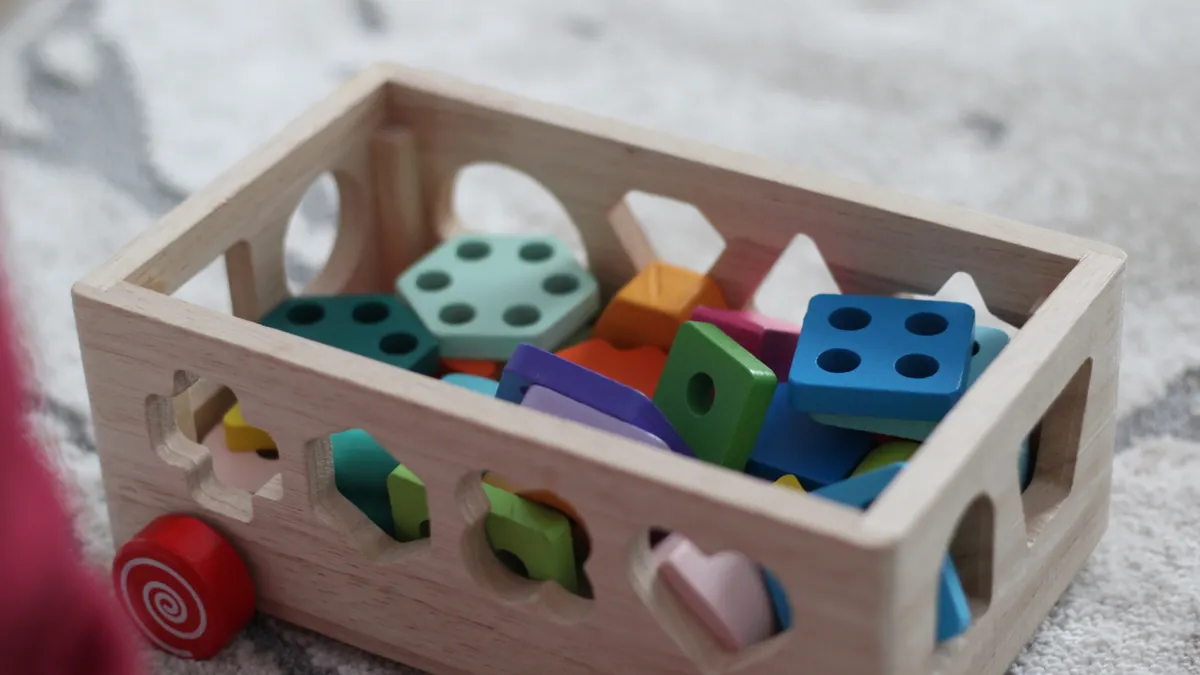
The calmest sensory toys usually give one sensation at a time, at a low intensity. A soft texture, a quiet crinkle, or a gentle glow is easier for a toddler’s system to process than a toy that squeaks, flashes, vibrates, and spins all at once.
Texture is often the best place to begin. Silicone nubs, fabric tags, ribbed rings, fleece patches, and smooth rubber each give clear feedback without overwhelming the room. Sensory balls are useful here because they can offer firm pressure, grip changes, and rolling movement without extra parts. A ball with mixed textures can be good if the textures are large, securely molded, and easy to wipe clean. Tiny raised dots are less useful if they are hard to grab or if the ball becomes a teething target. If a child has sensory or developmental needs, it can help to ask an occupational therapist which texture level fits best.
Sound needs tighter limits. Crinkle toys can be excellent for a toddler who likes cause and effect, but the sound should be brief and not startling. A toy that makes a sharp mechanical click every time it is touched can be rough in a small apartment, in a car, or during nap time. If the sound makes you flinch, it is probably too much for repeated play. A good rule is to listen from the next room; if the noise still feels intrusive, it is not a good daily toy.
Light-up toys need the most judgment. Gentle, steady lights are easier than strobing patterns or rapid color changes. Flashing lights can be fun for a moment and then become hard to ignore. I would avoid light-up toys that cycle quickly, pulse unpredictably, or require a dark room to “work.” Toddlers do not need a mini light show to get sensory input.
This section is also where the word “safe” gets misused in marketing. A toy can be physically safe and still be functionally too much. A toy that is loud, bright, and busy may not hurt a toddler, but it can dysregulate the child and disrupt the room. That is a real trade-off, not a minor preference.
What sensory toys are safest for 2-year-olds?
The safest sensory toys for 2-year-olds are often simple, one-piece, and easy to supervise: soft sensory balls, large crinkle cloth books, solid teething rings, and plain playdough used with close adult attention. These options keep texture front and center and reduce the odds of choking, noise overload, or broken parts.
For a 2-year-old, the safest choice usually has these traits:
- One large main body, not many attachments
- No batteries or hidden compartments
- No beads, pellets, magnets, or detachable caps
- No strong scent or taste
- A size that cannot disappear behind the couch or into a mouth in one motion
Playdough deserves a careful mention. It can be a very useful sensory material, but it is not a leave-it-out toy for this age. The main issue is taste safety. Toddlers explore with mouths, and even “non-toxic” does not mean “meant to be eaten.” Keep playdough sessions short, supervise closely, and choose a larger lump rather than tiny cut pieces. If the dough is labeled with ingredients or conforms to ASTM D-4236 for art materials, that is a helpful sign, but supervision still matters.
Water tables can be good sensory play if they are shallow, stable, and watched closely. The hazard is not only drowning; it is also slipping, tipping, and cups becoming throw toys. For a 2-year-old, a very shallow fill level and one or two simple tools are enough. A crowded water table with moving parts and floating gadgets is more work than benefit.
Crinkle toys are often a strong pick at this age because they are light, easy to grasp, and usually low mess. The downside is durability. If the fabric tears or the inner layer peels, retire it quickly.
Who this is not for: a 2-year-old who mouths hard objects constantly, throws toys at faces, or has a history of tearing soft items apart may need only the most solid, one-piece sensory toys until those habits settle down.
How messy is too messy for sensory play?
A sensory toy is too messy when the cleanup becomes the main event or when the mess itself creates a safety problem. For toddlers, that usually means loose glitter, sticky gels, open-ended water play without containment, or anything that leaves residue on hands and then goes into the eyes or mouth.
Mess-free play is worth prioritizing because the safest sensory toy is often the one you can use again tomorrow without a big setup. A textured ball, a silicone popper, a crinkle cube, or a laminated touch-and-feel book gives sensory input with little risk of floor slips, clogged drains, or skin irritation. Those are boring choices on paper and very practical in real life.
If you want to use playdough, water tables, or sensory bins, containment matters more than the material itself. A tray with raised edges, a washable mat under the chair, and a small amount of material can keep the session manageable. A 15-minute setup with a shallow container is usually enough. Once the play spills past the tray, the benefits drop fast.
There is also a hygiene angle. Grit, salt, sand, foam beads, and sticky residue can end up in eyes, ears, or nostrils. That risk rises when the toy encourages rubbing the face. A sensory toy that leaves a film on the hands is not a good match for a toddler who still forgets to wash before touching the mouth.
I would avoid any sensory product that depends on tiny loose fillers for its effect unless the child is old enough to follow a no-mouth rule reliably. That rule is fragile at toddler age. If the toy only works when the floor is covered with bits, it is probably better for later.
For a broader safety lens across the house and playroom, the safe toddler play hub belongs alongside this decision, not instead of it.
What labels and materials deserve more trust?
Labels matter most when they point to a real standard or a real material, not a vague promise. “Non-toxic,” “BPA-free,” and “phthalate-free” are useful terms, but they do not replace a close look at shape, size, and construction.
Start with the material. Food-grade silicone, solid wood with a smooth finish, sturdy fabric, and thick rubber are common in safer sensory toys because they are less likely to splinter or shed tiny parts. That said, material alone is not enough. A silicone toy with a weak seam can still fail, and a wooden toy with a chipped coating can still become a problem. The finish should feel smooth, and the toy should not shed flakes when rubbed between your fingers.
Then check the packaging for toy-specific language. Real standards such as ASTM F963, ASTM D4236 for art materials, EN 71, or a clear age recommendation tell you more than a generic “designed for little hands.” If a toy mentions sensory benefits but says nothing about safety standards, I would be cautious. The U.S. Consumer Product Safety Commission and ASTM both provide public guidance that can help you compare products.
Taste safety deserves a separate note. Toddlers chew. A toy meant for mouthing should not smell strongly of perfume, contain loose paint, or rely on an edible-looking coating. Playdough is the obvious example: even when a brand calls it child-friendly, it is still a supervised material, not a snack. The safest approach is to choose products that are explicitly made for mouthing or teething, or to keep non-mouth-safe sensory materials out of reach.
The hard truth is that no label can do all the work. A toy can be marketed as educational, calming, or sensory-friendly and still be wrong for a toddler who mouths, throws, or startles easily. Trust the construction more than the copy.
What should I skip, even if the toy looks fun?
I would skip any sensory toy with magnets, button batteries, long cords, foam that tears into crumbs, or a sound effect that makes adults reach for the volume button. Those features are common in toys marketed as exciting, but they create the most avoidable toddler risks.
Magnets deserve special caution because a loose magnet is not just a choking hazard; swallowed magnets can create a medical emergency. Button batteries are another hard no for most toddlers unless the compartment is fully secured and the toy is clearly meant for older children under supervision. If the battery door opens easily with a fingernail or coin, skip it.
Foam toys can be tempting because they feel soft and light. The problem is that some foam sheds fragments once a toddler starts biting, twisting, or dragging it across the floor. Those fragments end up everywhere. A toy that leaves crumbs is not a clean sensory experience; it is a cleanup burden and a swallowing risk.
This is also where “too loud” becomes a safety issue, not just a courtesy issue. A toy with a siren-like squeal, a sharp electronic chirp, or repeated sound effects can upset a toddler fast. If the toy cannot be used at a low volume, or if it cannot be turned off, I would leave it on the shelf.
The best sensory toy is usually the least dramatic one: a firm ball, a thick crinkle square, a simple teether, or a shallow water activity with a handful of large tools. That can sound dull. It is also the kind of dull that keeps a toddler playing safely for 5 or 10 quiet minutes, which is often the real win.
Are sensory toys safe for toddlers?
Yes, sensory toys can be safe for toddlers when they are age-appropriate, one-piece or well-sealed, and used with supervision. The risk comes from small parts, noise, lights, cords, and materials that are too messy or easy to swallow. A simple toy with a clear sensory feature is usually safer than a busy one with multiple effects.
What sensory toys are safest for 2-year-olds?
The safest options for many 2-year-olds are sensory balls, crinkle books, solid teething toys, and plain playdough used with close adult supervision. These toys give texture or cause-and-effect without adding much risk.
Drafted with AI; not yet reviewed by a person.