Last updated: October 27, 2026
Quick Answer: 7 steps are usually enough to clean toddler toys safely. Toddler toys can be cleaned safely with soap, warm water, and a little material-specific care; the trick is matching the method to plastic, wood, silicone, bath toys, stuffed toys, or anything that says dishwasher-safe. This article on How to Clean and Sanitize Toddler Toys Without Damaging Them focuses on removing grime and reducing germs without cracking plastic, stripping a wood finish, or ruining electronics.
The safest way to clean toddler toys
Start with soap, warm water, and the toy’s label before you reach for anything stronger. If the toy has a battery compartment, cloth covering, glued seams, painted details, or a printed “top rack only” note, that changes the method. A basic cleaning kit is enough for most jobs: mild dish soap, a basin, a soft cloth or sponge, and a drying towel. For a general safety baseline, the U.S. Consumer Product Safety Commission advises checking labels and manufacturer instructions before cleaning children’s items.
-
Sort the toys by material and condition. Put plastic, wood, silicone, stuffed toys, bath toys, and electronic toys in separate piles. If a toy has cracks, peeling paint, frayed seams, mildew, or a missing battery cover, set it aside. The result you want here is a pile that can be cleaned together without mixing methods.
-
Remove loose dirt first. Shake out crumbs, rinse off sand, or wipe off dried food before washing. This helps keep cloudy water from leaving residue on the toy and can reduce grit that scratches plastic or wood finish. If debris seems stuck in a crack or the toy surface is damaged, consult the manufacturer’s guidance before scrubbing harder.
-
Wash with warm water and mild soap. Use water that feels warm to the hand, not hot, and a small amount of soap. Scrub smooth surfaces with a soft cloth or sponge and work into seams, grooves, and edges. When this step works, the toy loses its sticky film and feels clean rather than slick.
-
Rinse completely. Run the toy under clean water or wipe it with a fresh damp cloth until no soap remains. Leftover soap can attract dirt, leave a film, and make silicone or plastic feel tacky.
-
Sanitize only when needed. After illness, after diaper-area contact, after bath-toy mildew, or after a toy has been mouthed by a sick toddler, use a sanitizer method that fits the material. That may mean a diluted bleach solution for hard nonporous toys, or a dishwasher cycle for dishwasher-safe items. The toy should dry without a chemical smell or visible residue. If you are unsure whether a toy can tolerate sanitizing, consult the manufacturer or a pediatric source before using stronger methods.
-
Dry fully before returning the toy to use. Air-dry on a clean towel or rack, and turn bath toys upside down so trapped water can drain. When drying works, the toy feels dry in seams and under edges, not just on the outside.
-
Inspect before storage. Check for cracks, peeling, swelling, loose eyes, or any new sticky spots. If a toy changed shape, it probably did not like the cleaning method and should not be washed that way again.
This basic process is the one to use when you want cleanliness without damage. It is not the right choice for toys that are already coming apart, for antiques, or for any toy whose label forbids water.
How to clean plastic toddler toys without cracking them
Plastic toddler toys clean up best with warm soap and water, and many can also go in the dishwasher if the label says so. Hard plastic is forgiving, but painted plastic, thin plastic, and battery-operated toys need a lighter touch. The mistake here is using very hot water, harsh scrub pads, or strong chemicals on a toy that only needed a normal wash.
For everyday cleaning, wipe or wash plastic toys in warm water with mild soap. Use a microfiber cloth, sponge, or soft toothbrush for buttons and molded seams. If the toy is large, fill a sink or basin and soak it for a few minutes, then rinse well. A clean plastic toy should feel smooth, not greasy, and should not hold onto suds in corners.
Dishwasher cleaning works for some hard plastic toys, especially simple shapes with no batteries or glued-on parts. Put them on the top rack only unless the label says otherwise. Use a normal cycle, not a high-heat sanitizing cycle unless the manufacturer allows it. Very high heat can warp thin plastic, cloud clear plastic, or loosen decals.
For sanitizing, a bleach solution can be used on hard, nonporous plastic if the toy can handle it. The usual household approach is a dilute bleach mix made fresh, but the toy must be rinsed afterward and air-dried completely. The CDC notes that bleach solutions should be used carefully and mixed according to label directions. If you are unsure whether the plastic is painted, hollow, or heat-sensitive, do not guess; stick with soap and water.
Do not put cracked plastic back into heavy use. Tiny splits hold grime and are hard to rinse clean. If the toy bends, smells strongly after washing, or turns cloudy after a cleaning method, that method was too aggressive.
How do I clean wooden toddler toys without ruining the finish?
Wooden toddler toys should be wiped, not soaked, because prolonged water exposure can swell the wood and damage the finish. The finish matters as much as the wood itself; once it wears down, the toy absorbs moisture faster and becomes harder to keep clean. A dry or barely damp cloth is usually the right tool.
Start with a soft cloth dampened in warm water with a drop of mild soap. Wipe the toy, then follow with a second cloth dampened with clean water to remove soap. Dry right away with a towel. If the toy has carved grooves, use a cotton swab or soft brush, but keep water out of joints and seams. The toy should look clean and feel dry within a few minutes, not sit wet on the surface.
Wooden toys do not belong in the dishwasher or washing machine. They also do poorly with soaking, steam, and repeated bleach use. Those methods can lift the finish, raise the grain, and leave the surface rough. If the toy is untreated wood, be extra careful, because untreated surfaces may absorb moisture more readily than sealed ones; if you are unsure how the toy was finished, consult the manufacturer or a woodworking professional before using anything stronger than soap and water.
For disinfecting, less is usually more. If a wooden toy has been mouthed or has visible grime, soap-and-water cleaning followed by full drying is often the safest default. If there is visible mold, swelling, or a soft spot, the problem is not just dirt; that toy may no longer be worth keeping because the damage has gone past simple cleaning.
When a wooden toy has a glossy finish, avoid abrasive pads and alcohol-heavy wipes. They can dull the surface and strip protective coating over time. A toy that stays smooth and intact after cleaning is one that can be reused safely.
Can you put toddler toys in the dishwasher?
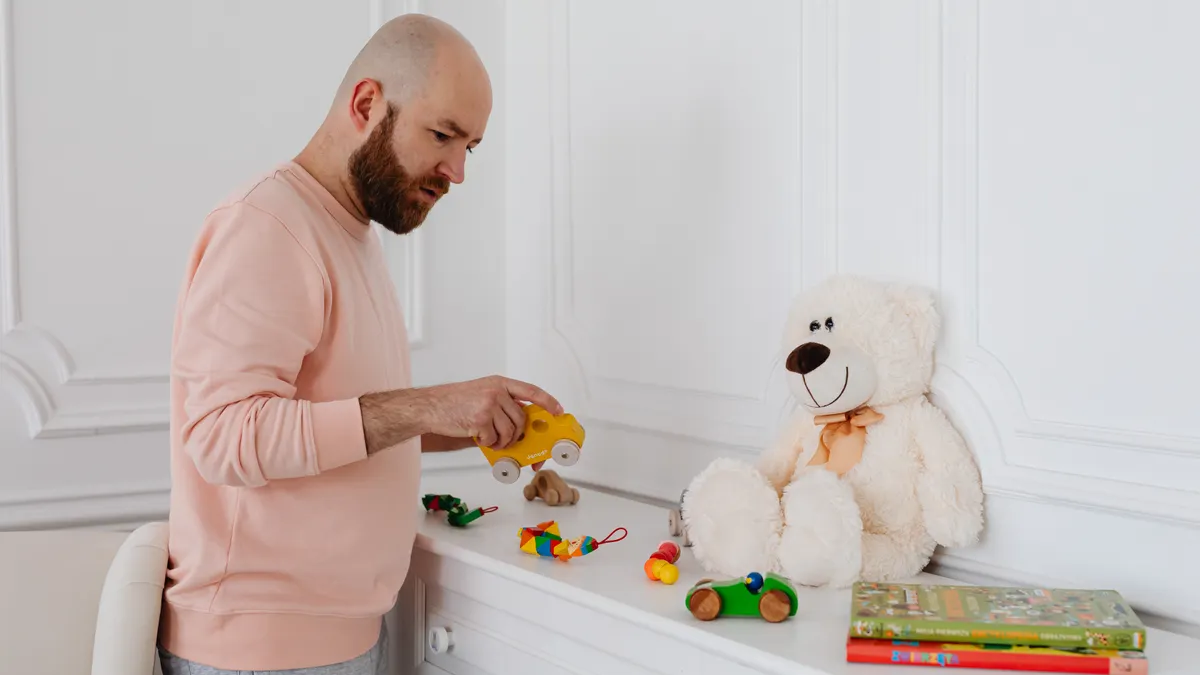
Yes, but only if the toy is marked dishwasher-safe or is clearly made for that kind of heat and water exposure. The dishwasher is convenient for hard plastic and some silicone toys, but it is a bad fit for wood, stuffed toys, electronics, glued parts, and many toys with decals or hollow spaces that trap water.
Use the top rack only. The heat there is lower and farther from the heating element. Place small toys in a mesh dishwasher basket or a closed-top utensil basket so they do not fall through or bounce around. A normal cycle is usually safer than a heavy-duty cycle. If the toy comes out warped, cloudy, or sticky, it was not dishwasher-friendly enough for that setting.
Silicone toys often do well in the dishwasher if the manufacturer says yes. The material tolerates heat better than thin plastic, but silicone can hold onto soap residue or odors if you use a very scented detergent or do not rinse it well first. If the toy is a teether, check for tiny tears before washing, because cracks can trap moisture and debris. If you are unsure whether a particular silicone item should be dishwashed, consult the maker’s care instructions.
Skip the dishwasher for toys with batteries, speaker holes, fabric parts, glued-on eyes, or soft vinyl that can deform. A dishwasher cannot tell the difference between a safe toy and one that will fail under heat. That is why the label matters more than convenience.
The biggest trade-off is speed versus control. The dishwasher can save time on a pile of durable toys, but it gives you less control over heat and water flow. For mixed toy bins, hand-washing is safer.
How to clean bath toys and stop mildew from coming back
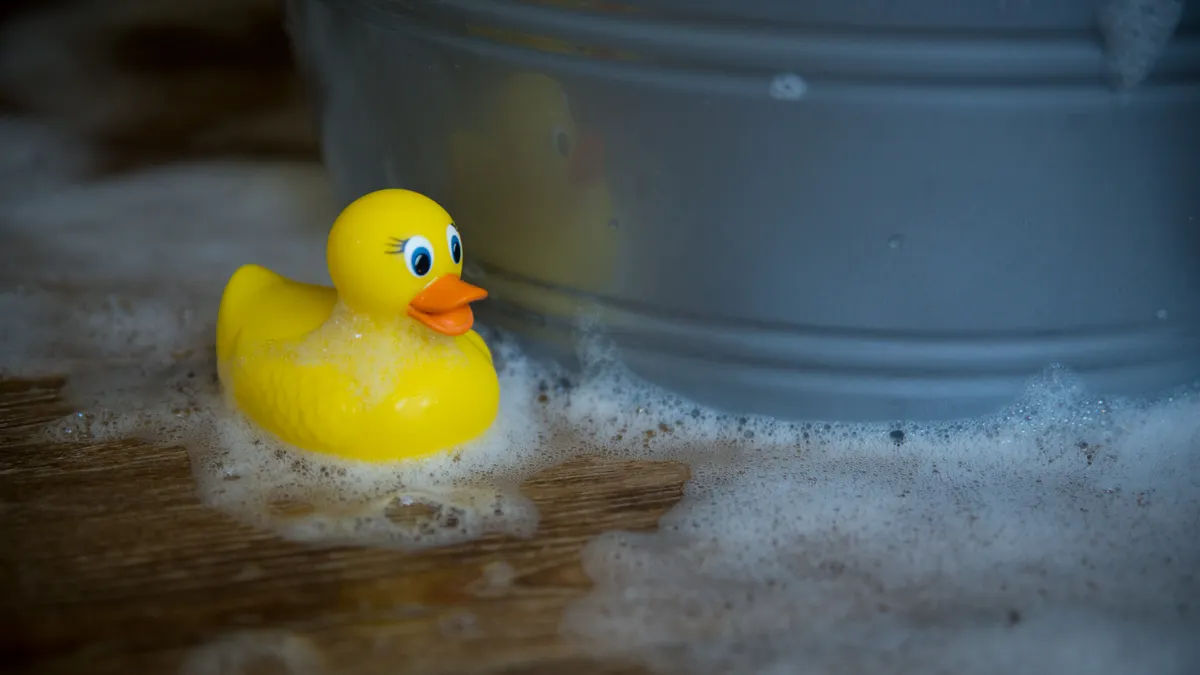
Bath toys need drainage, because trapped water is what leads to mildew and the black sludge that shows up in squeeze toys and floating characters. Soap alone will not solve that problem if the inside stays wet. The fix is to clean the outside and empty the inside.
After bath time, squeeze out any water you can. Then wash the toy with warm water and soap, rinse it, and let it dry in open air where both ends can drain. If the toy has a hole, shake it vigorously and store it upside down. A drying rack or mesh bag works better than a closed tub because air can move through the toys.
For toys that already have mildew inside, disassemble them if the design allows it, or replace them if they cannot be fully emptied. Some bath toys are made as sealed pieces; once the interior is contaminated, surface cleaning will not reach the hidden moisture. A toy that smells musty after drying is telling you water is still trapped somewhere.
If you want to sanitize bath toys, a diluted bleach soak is sometimes used on hard, nonporous toys that can be fully rinsed afterward. That is a stronger option than soap, but it is also the one most likely to damage prints or soften cheaper materials if used too often. Follow with a long rinse and complete air-drying. Never leave a bleach smell behind.
Bath toys are the place where prevention matters most. A toy that drains well and dries open to air stays cleaner with less effort than one that gets scrubbed every week but is stored wet.
What to do with stuffed toys, silicone teethers, and toys with batteries
Stuffed toys should usually be washed on the gentlest setting the label allows, while silicone teethers can often take warm soap, boiling water only if the maker allows it, or a dishwasher cycle. Battery-powered toys should be wiped, not soaked. These three categories fail for different reasons, and if you are unsure about the toy’s construction, consult the label or manufacturer before treating them the same way.
For stuffed toys, check the care tag first. If machine washing is allowed, put the toy in a mesh laundry bag or pillowcase and use a gentle cycle with mild detergent. Air-dry completely, because a dryer can shrink fabric, harden stuffing, or melt glued parts. If the toy has a sound box or sewn-on accessories, it may need spot cleaning only. A stuffed toy is clean when it feels dry all the way through, not just on the outside.
Silicone is one of the easier materials to clean because it does not absorb liquid the way fabric or untreated wood does, but care instructions still matter. Wash it with soap and warm water, or use the dishwasher if approved. Watch for small cuts, though. A nick in silicone can collect grime and make the toy feel tacky even after washing. If the toy has a seam or molded opening, check the maker’s instructions before using heat.
Battery toys are the most likely to be damaged by water. Remove batteries if the compartment opens safely, then wipe the exterior with a barely damp cloth and mild soap. Keep moisture away from speaker holes, seams, and charging ports. If the toy has sticky grime in crevices, use a cotton swab dipped in soapy water and then a dry swab. A battery toy should come away clean without any water getting inside.
This is the section where the wrong method costs the most. A washer can ruin a stuffed toy’s shape, a dishwasher can deform a battery toy, and boiling the wrong silicone can warp a teether. Material matters more than convenience.
When cleaning is not enough
Cleaning is not enough when a toy is cracked, moldy inside, peeling, or impossible to dry fully. In those cases, the safest move is to retire the toy rather than keep trying stronger cleaners. That applies especially to toys with damaged seams, exposed stuffing, or flaking paint.
A toy with a surface stain is one thing. A toy that holds water, smells sour after drying, or sheds material is another. No amount of soap will make a broken toy sound again. If the damage is in the wood finish, the foam, the stuffing, or the battery casing, further washing can make the problem worse by spreading moisture where it does not belong.
If a toy was exposed to something beyond normal dirt, such as bodily fluids or visible mold, use caution and follow the maker’s instructions before using bleach or any sanitizer. When a toy is expensive, sentimental, or has parts that are not clearly labeled, the label and manufacturer guidance matter more than guesswork. A toy that cannot be cleaned safely is not a good toy to keep in circulation.
For the broader playroom routine, the safe play guidance on safe toddler play can help with sorting what belongs in a regular cleaning cycle and what needs to be removed from use.
Key Takeaways
- Use soap and warm water first; they handle most toddler toy messes without stressing the material.
- Match the method to the toy: wood gets wiped, plastic can often be washed or dishwashed, silicone is durable, and bath toys need drainage.
- Sanitizing is for specific situations, not every wash, and stronger methods can shorten a toy’s life.
- The fastest way to ruin a toy is heat, soaking, or bleach on the wrong material.
- If a toy smells bad after drying, feels sticky, or has visible damage, cleaning is no longer the whole answer.
How often should toddler toys be cleaned?
Daily-touch toys should be cleaned more often than toys that stay on a shelf. A practical routine is to wash mouthed toys and visibly dirty toys right away, then clean other frequently used toys on a weekly basis. Bath toys need drying after every use because moisture, not just dirt, causes most of the trouble. The American Academy of Pediatrics recommends extra attention to toys that are mouthed or shared during illness.
Can you put toddler toys in the dishwasher?
Yes, if the toy is labeled dishwasher-safe and is made of a material that can handle heat. Hard plastic and some silicone toys are common candidates, but only top-rack placement is sensible. Keep wood, electronics, stuffed toys, and anything with glued parts out of the dishwasher.
How do you disinfect bath toys?
Dry them fully first, because trapped water defeats disinfection. Wash with soap and warm water, then use a diluted bleach method only on toys that can be rinsed thoroughly and are meant to tolerate it. If a bath toy stays musty or won’t drain, replacement is often safer than repeated cleaning.
Drafted with AI; not yet reviewed by a person.