Last updated: October 27, 2026
Quick Answer: Safe toddler play is easiest to create in one low, visible space with large toys, anchored furniture, and active supervision; for many families, a room around 6 by 8 feet can be enough if the hazards are removed.
Safe toddler play, in this Safe toddler play — The Complete Guide, means setting up a space where a 1- to 3-year-old can move, climb, throw, stack, and explore without turning every five minutes into a rescue mission. The real question is not “How do I keep a toddler busy?” It is “How do I let a toddler play freely without preventable injuries?” I write on child safety and family health guidance, and the right answer is usually less about fancy gear and more about room layout, supervision, and age-appropriate hazards.
Key takeaways
- A simple, low, and easy-to-watch toddler play space can help reduce choking hazards and cords being within reach.
- Soft flooring helps, but it does not replace supervision around stairs, heaters, water, or unstable furniture.
- “Age-appropriate” matters more than the toy label; toddlers need toys that cannot fit through a choke tube and that do not rely on tiny detachable parts.
- The biggest risks at home are often mundane: falls, buttons or batteries, hot drinks, unsecured furniture, and access to water; if you are unsure about a specific setup, consult a pediatrician or child safety professional and check the American Academy of Pediatrics and U.S. Consumer Product Safety Commission guidance.
- A play area works best when it can be reset in minutes, so the adult stays alert instead of buried in cleanup.
- If a toy, surface, or activity seems borderline for a specific toddler, skip it. Simplicity is safer than cleverness.
What “safe toddler play” really means
Safe toddler play means giving a young child room to practice balance, coordination, language, and independence while removing the hazards that outmatch their size and judgment. The practical goal is not zero risk; that is impossible. The goal is to keep the play environment inside a toddler’s ability to recover from mistakes.
That means three things at once. First, the space should reduce injury from falls, pinches, cuts, burns, choking, and drowning. Second, the toys should match a toddler’s developmental stage rather than a sibling’s. Third, the adult should be able to see trouble fast. A play area that requires constant rearranging is usually not safe for long.
For most families, the standard to keep in mind is age 1 to 3. That is the stage when children climb onto furniture, put objects in their mouths, start testing doors, and move from supervised play to opportunistic exploration in seconds. A “safe” setup for a 12-month-old may be too limited for a 30-month-old, and a setup for a 3-year-old may still be unsafe for a younger sibling. The right answer changes with the least capable child in the room.
Two authoritative starting points are worth reading directly: the American Academy of Pediatrics’ guidance on home safety and the U.S. Consumer Product Safety Commission’s toy safety information. Both explain why toy size, stable furniture, and close supervision matter more than decorative extras. The CPSC also publishes recalls, which is useful because a toy can look harmless and still carry a real hazard.
If there is one rule to keep, it is this: safe play is not a product category. It is a setup.
What the safest play space looks like
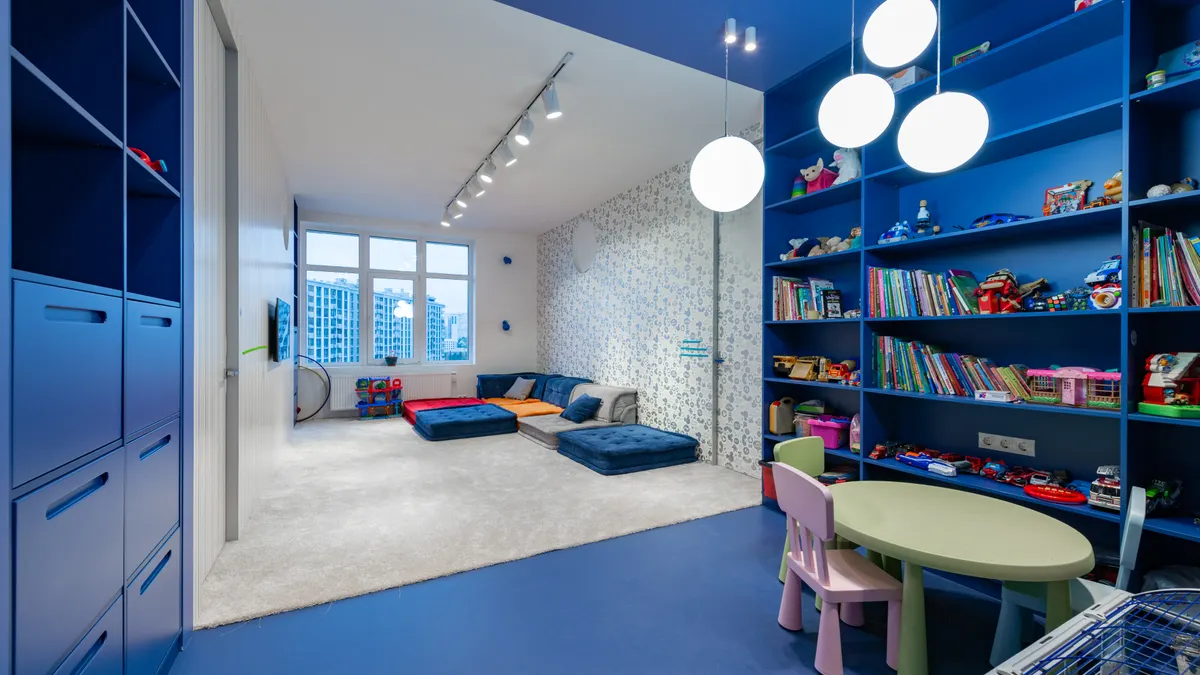
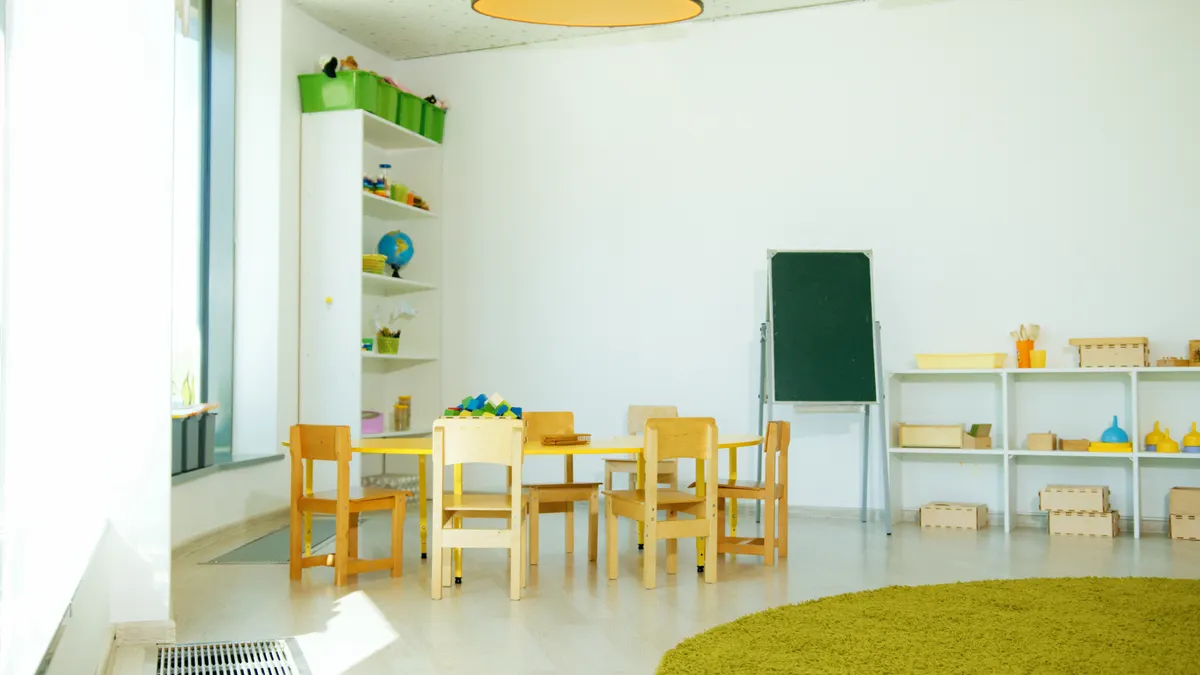
A safest play space is usually one room or one fenced-off zone with a hard stop at the edges. A clear rectangle, even just 6 by 8 feet, is often better than a bigger cluttered area because it lets the adult see the floor, the child, and the exits. The room should not contain cords, tall unstable furniture, heavy decor that can be pulled down, or open access to stairs, water, or kitchen heat.
Good layout starts low. Keep the main toys on the floor or in bins no higher than waist level for the shortest adult who supervises. A low shelf is better than a tall bookcase. Rounded corners help, but they do not solve tip-over risk. Anchoring furniture to studs matters more than padding edges. Dressers, TVs, and shelving units should be secured because a toddler uses every edge like a ladder; if you are unsure about the safest mounting method, consult a child safety professional or follow CPSC anchor guidance.
Flooring matters too. A soft rug, foam mat, or play mat can reduce the impact of ordinary tumbles, but it should stay flat and non-slip. Loose rugs that curl at the corners create a trip edge. Thick foam puzzle mats are fine for many families, but they can trap dirt in seams and are not a substitute for keeping the space free of small objects.
The toys in this space are usually large, simple, and durable: stacking cups, board books, large blocks, push toys, shape sorters with oversized parts, and balls that cannot be swallowed. The toy itself should not have long cords, exposed batteries, small magnets, or detachable eyes and buttons. A toy that is “quiet” is not necessarily safe; a toy with a single button battery can be far more dangerous than one that makes noise.
A safer room is often a boring room. That is the point.
Which toys belong in a toddler play area?
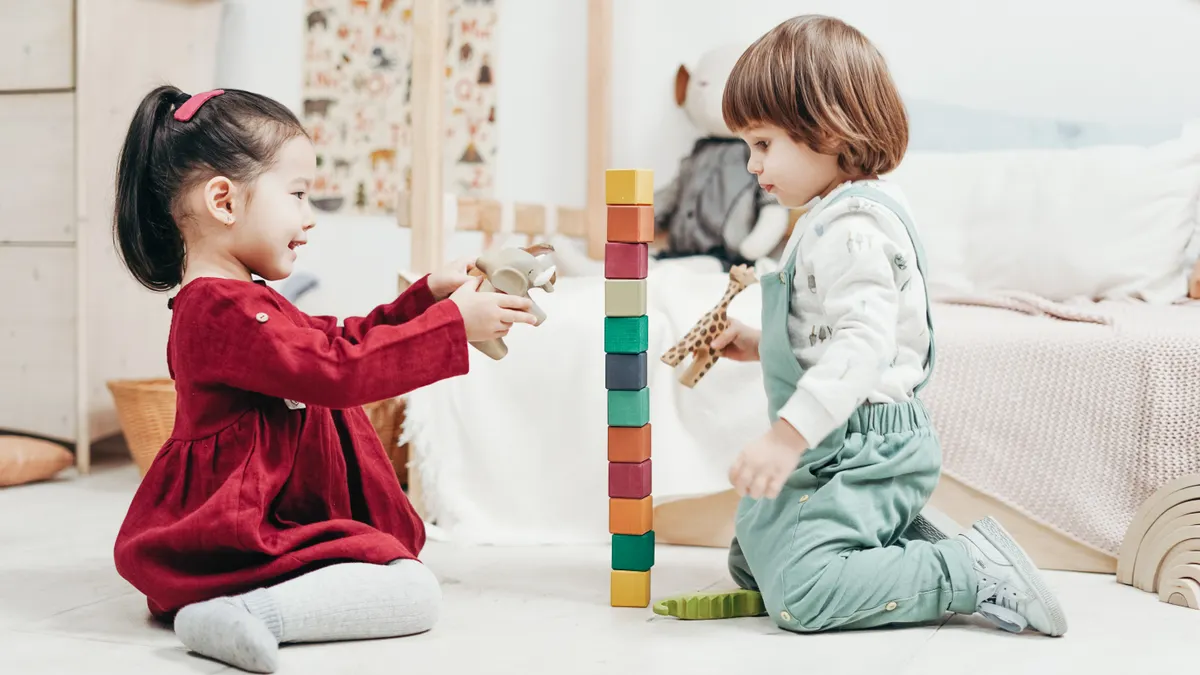
Toys belong in a toddler play area when they are physically hard to misuse. That means no small parts that fit through a choke tube, no long strings that can wrap around the neck, no strong magnets, and no pieces that break into sharp fragments after a drop. The product label may say “ages 3+,” but that is only a starting point; the real test is whether the toy fits the child’s mouth, grip, and impulse level.
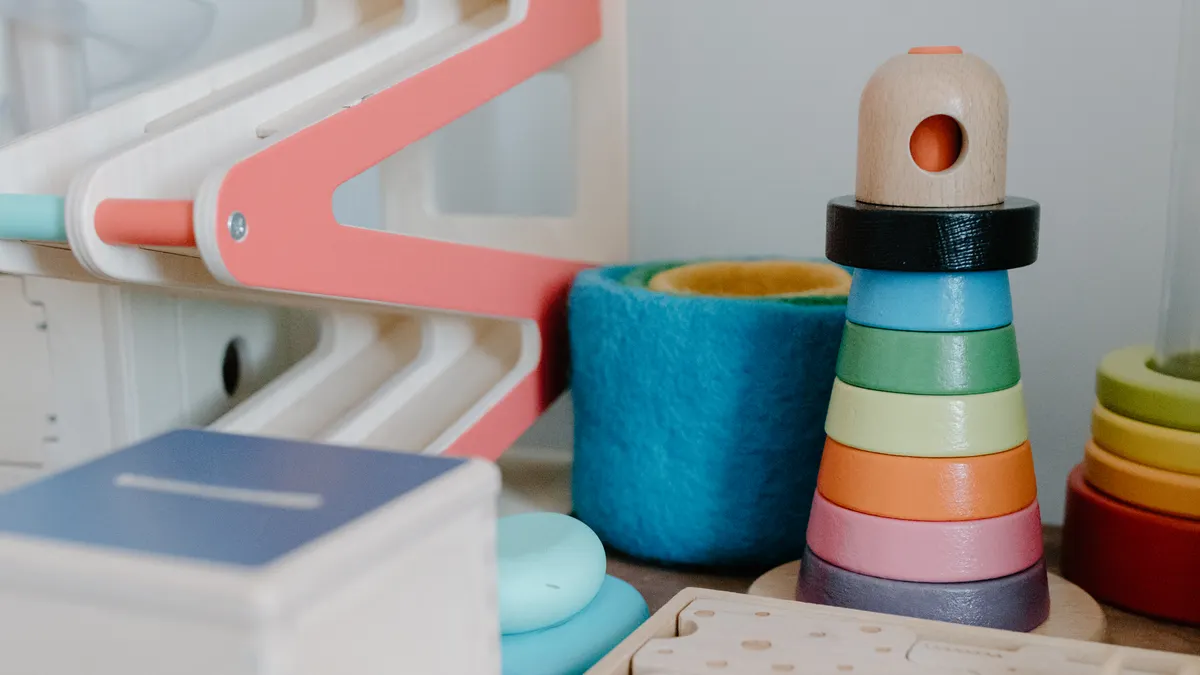
Open-ended toys with limited failure modes are a good fit here. Wooden or plastic blocks that are too large to swallow, chunky puzzles, push-and-pull toys, large crayons, dolls with stitched features, and simple pretend-play items usually work well. These are useful because they support fine motor practice without adding many hidden hazards. Books with thick pages also belong here because they encourage sitting, turning pages, and early language without small parts.
The toys I would skip for younger toddlers are the ones with batteries, tiny accessories, cords, glass, or breakable hard edges. This includes many “educational” toys that look impressive on the box but have many small detachable pieces. Music toys with battery compartments are a special risk if the screws are weak or the panel is loose. Button batteries are especially dangerous because a swallowed battery can cause serious injury quickly. The U.S. National Capital Poison Center’s battery ingestion guidance is a strong reference point for what makes these items so serious.
One more thing that generic advice often misses: sensory toys are not automatically safe just because they are marketed as gentle. Kinetic sand, water beads, and small bead-based crafts can be choking, ingestion, or cleanup headaches. Many families discover this after the fact. I would treat them as off-limits for any toddler who still mouths toys regularly.
A good toddler toy earns its place by being sturdy, simple, and obvious. If it needs a long instruction sheet to be safe, it is probably the wrong toy.
How do I toddler-proof the home for play?
Toddler-proofing the home for play means removing the hazards a child can reach in under 10 seconds, then watching the rest. The most effective changes are boring but decisive: anchor furniture, cover outlets where needed, lock cabinets with chemicals or sharp tools, tuck cords away, and keep cords from blinds completely out of reach. No single gadget solves safety. The setup does.
Start with the floor. Small objects, coins, batteries, medication, pet food, and craft scraps should not be anywhere near the play zone. A toddler’s ability to find a single crumb or screw is annoying and dangerous at the same time. Under furniture is part of the room too; if a child can crawl there, that space needs to be clear.
Then look up. Window blind cords, tablecloths, hanging plants, charging cables, and lamp cords all create hazards. A child can pull on one item and trigger a chain reaction. In many homes, the easiest fix is to move charging stations out of the play area entirely. The same goes for hot drinks and cooking tools. A toddler does not need much time to grab a cup from a low table.
Next, address the furniture. Secure dressers, bookcases, and TVs. The CPSC has long warned about tip-over incidents, and those warnings are not abstract. A child climbing a drawer can turn a stable-looking room into an emergency. If a piece cannot be anchored, place it outside the play zone.
Finally, control access. A baby gate that actually latches matters more than a decorative barrier. Stairs should never be part of free play unless they are tightly supervised. Bathrooms, laundry rooms, garages, and kitchens need closed or locked access when a toddler is loose in the house.
The truth that many generic guides skip is this: toddler-proofing is not one-and-done. Every new object in the room changes the risk. A gift bag, a purse, a visitor’s phone charger, or a floor cushion can become the hazard of the day.
How much supervision does toddler play need?
Toddler play needs active supervision, not just being in the same house. For many activities, “I can hear them from the next room” is not enough. The right level of supervision depends on the setting, the child’s age, and the hazards present, but the safest default is close enough to intervene fast and calm enough to notice changes in behavior.
In a clean floor-level play zone with large toys, a parent or caregiver can often supervise with nearby tasks. In a room with stairs, open water, pets, older siblings, or mixed-age toys, attention has to tighten. Outdoors, the standard rises again because falls, gates, driveways, and water hazards appear quickly. Supervision should be highest around anything involving climbing, riding toys, water, sand, animals, or shared objects with older siblings.
The hard part is that toddlers look safe right before they are not. A child sitting quietly with a toy can suddenly climb a sofa, unlatch a gate, or put a found object in the mouth. That is why one of the best safety habits is scanning the room every few minutes and after every transition. Transitions are high-risk moments: visitors arrive, snacks get served, doors open, older kids leave toys behind, and adults get distracted.
A useful rule is that if the toddler cannot self-correct from the hazard, the adult needs to be closer. For example, a child on a low padded mat with large blocks may need less direct hovering than a child near stairs or a ball pit. But even the calmer scene still needs real oversight.
This is also where expectations matter. Safe play does not mean uninterrupted play. It means adult attention is available where it counts. A room can be child-friendly and still require constant judgment.
Outdoor toddler play: what changes?
Outdoor toddler play is safer when the boundary is controlled and the surface is forgiving, but it also introduces more hazards per minute than most indoor play. Sun, water, uneven ground, insects, tools, bikes, driveways, and neighboring hazards all matter outside. That is why the best outdoor setup is usually a fenced, enclosed area with shade, a flat surface, and only a few large toys.
The surface should be predictable. Grass is common, but it can hide holes, rocks, and animal waste. Concrete and pavers are harder on falls. A play surface that is level and easy to inspect is better than a decorative yard with surprises. If a climbing structure is used, it should be low, stable, and designed for young children, not for older siblings. The goal is short climbs, not confidence courses.
Water changes everything. Even shallow water deserves strict attention because toddlers move fast and have little recovery time if they slip. Kiddie pools, splash tables, buckets, birdbaths, fountains, and pet water bowls are all relevant. A child can drown in very little water, so emptying containers after use matters. This is one of the few areas where “I was watching” does not always equal “I was close enough.”
Sun and temperature deserve a mention because they are commonly ignored. Shade, hats, and child-safe sunscreen reduce risk, but they do not replace a plan for overheating. Toddlers get sweaty and irritable fast. If play is outside on a hot day, the safest move may be to shorten the session and rotate indoors.
Outdoor play is excellent for toddlers when the space is contained. It is a poor fit when the yard opens directly onto a driveway, street, pool, or unfenced neighbor access. In that case, the environment is doing too much work for the adult.
Safe play by age: 12 months, 2 years, and 3 years
Safe play changes across toddlerhood, and the differences are not subtle. A 12-month-old, a 2-year-old, and a 3-year-old all count as toddlers in common speech, but their risk profiles are different enough to change the room.
For a child around 12 months, the main issues are mouthing, pulling to stand, cruising, and falling. Toys should be very large, simple, and unbreakable. Bins should be low and light. Anything with cords, tiny wheels, magnets, or batteries should stay out of reach. The play zone should be mostly on the floor because climbing is often accidental at this age.
At around 2 years, climbing becomes deliberate. This is the age when a couch starts looking like a stair, a drawer becomes a foothold, and a gate becomes something to test. The play area needs more stability and fewer tempting surfaces. Fine-motor toys can be more complex, but the pieces still need to be large. Simple pretend play, books, blocks, and ride-on toys with no hard edges work well if the area is uncluttered.
By around 3 years, many children can follow simple safety rules, but that does not make them reliably safe. They can understand “no stairs” and still forget 30 seconds later. This is the age to offer more active play under tighter structure: throwing at a soft target, short obstacle courses, balance practice at ground level, and supervised outdoor play. The hazards shift from mouthing to overconfidence. That is a different problem, not a solved one.
The wrong assumption is that one toddler-proof setup fits all ages. It rarely does. A family with two toddlers often needs a split strategy or the safer child will keep being outgrown by the other one’s toy choices.
When should I rethink the whole setup?
I would rethink the whole setup when the room keeps creating the same hazard despite repeated fixes. If the child keeps reaching for cords, opening unsafe cabinets, climbing furniture, or finding tiny objects you did not know were there, the room may be asking too much of the adult. In that case, the answer is not more supervision alone. It may be a different room, a smaller number of toys, or a hard reset of the layout.
The same is true when the setup mixes age groups without a clean boundary. A 6-year-old’s construction set, a pet’s chew toy, and a toddler’s sensory bin should not share the same open space. Even if nothing bad has happened yet, the room is loaded. A toddler does not need much time to move one item into the mouth or pull another item down.
Also rethink the setup if an adult cannot maintain attention because the room is too noisy, too cluttered, or too spread out. A beautiful play room can still be unsafe if it is impossible to scan. Simpler layouts make better safety choices because they reduce cognitive load.
One more reason to change course: repeated near-misses. If there have been frequent falls, tip attempts, swallowed objects, or access to dangerous areas, the current arrangement is not working. Near-misses are the warning, not the proof of safety.
This is the point where many families cling to a setup because they already bought it or assembled it. That is the wrong reason to keep a play space. A room should earn its keep every day.
What is the honest verdict on safe toddler play?
Choose a simple, low, visible play zone if the child is 1 to 3 years old, the space can be anchored and cleared, and the main goal is everyday indoor play with large toys. Choose tighter control and smaller play options if the child still mouths toys often, climbs aggressively, or shares space with older siblings, stairs, or water. Neither if the room contains unrepaired hazards like unsecured furniture, loose cords, accessible batteries, or open water that you cannot remove.
The safest path is rarely the most elaborate one. A low shelf, a few large toys, a soft floor, locked hazards, and active supervision beat a room full of gadgets every time. If a setup needs constant explanation to stay safe, it is the wrong setup for toddler play.
What mistakes do families make most often?
The most common mistake is treating toy choice as the whole safety plan. A safe toy in an unsafe room is still unsafe. Another frequent mistake is leaving a play space half-toddler-proofed and assuming vigilance will cover the rest. That usually fails when a caregiver gets distracted for 30 seconds.
A third mistake is using products that look useful but create hidden problems: toy chests with heavy lids, bins with pinch points, loose foam mats, small decorative cushions, and plastic pieces that break under pressure. Even a harmless-looking storage box can become a lid-slam hazard if the design is wrong for little hands.
Families also underestimate how quickly a child outgrows one safety setup and into another. What worked last month may no longer work now. If the child has begun dragging chairs, pushing bins, or opening doors, the room needs a fresh look.
Which sources are worth trusting on this topic?
The safest advice on toddler play comes from organizations that focus on child injury prevention rather than toy marketing. The American Academy of Pediatrics offers parent guidance on home safety and developmental risk. The U.S. Consumer Product Safety Commission publishes toy guidance and recalls. The National Capital Poison Center provides clear guidance on button batteries and other ingestion hazards. Safe Kids Worldwide also publishes practical home and play injury-prevention advice.
These sources do not replace a pediatrician’s advice if there is a specific medical or developmental concern, but they do give a reliable baseline. When a guide ignores furniture tip-over risk, battery ingestion, blind cords, or drowning hazards, it is incomplete.
The best toddler play advice is not dramatic. It is repetitive because the risks are repetitive. Keep the room simple, keep the toys large, keep the hazards out of reach, and keep an adult close enough to intervene. That is the whole game, and it is enough.
Drafted with AI; not yet reviewed by a person.