Last updated: October 29, 2026
Key Takeaways
- Montessori toys for toddlers support independent play with simple design, real-world actions, and a match to current skill.
- A Montessori toy often looks calm and plain, so the child’s hands do the real work.
- The right toy is the one the child can use with effort and little frustration.
- Practical life toys often give the best value because they turn daily motions into practice and usually cost less than themed sets.
Montessori toys for toddlers are simple, purpose-built playthings that help a young child do one clear task at a time: fit, sort, stack, pour, open, close, or carry. This What Are Montessori Toys for Toddlers? A Practical Buying Guide explains what to look for. A good Montessori toy for a toddler is usually open-ended, made from wood or another honest material, and sized so small hands can manipulate it without a lot of adult help.
Montessori toys for toddlers explained in plain English
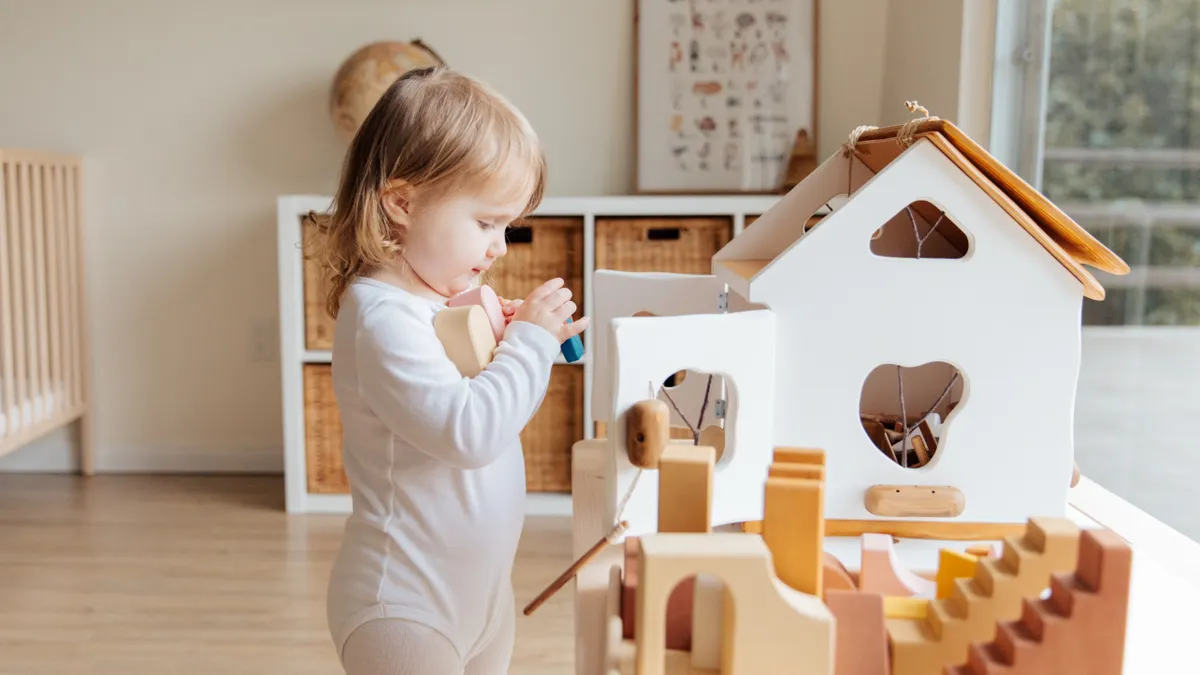
Montessori toys for toddlers are toys that support independent play through simple design, real-world actions, and a clear match between the item and the child’s current skill. That usually means one visible purpose, not flashing lights, sound effects, or twenty different “modes.”
The idea comes from Maria Montessori’s broader approach to education, where the child works with prepared materials and repeats an action until it makes sense in the hands and mind. For toddlers, that often looks like wooden puzzles with large knobs, stacking rings, object permanence boxes, shape sorters, work trays, pouring sets, and practical life toys such as small pitchers, brooms, or spooning tools. Montessori materials are also used in classrooms for ages 0 to 3 and 3 to 6, which is one reason toddler items are often built for repetition rather than novelty.
The draw is not that these toys are magical. The draw is that they let a toddler concentrate. A 16-month-old putting rings on a peg or transferring dry beans with a small scoop is doing the kind of work Montessori materials are built for: one movement, one result, repeated many times. That repetition matters more than entertainment value.
A generic toy that does everything can crowd out the child’s own effort. A Montessori-style toy usually does the opposite. It leaves space for the child to notice cause and effect, make a mistake, and try again. That is why examples often feel plain to adults.
Not every wooden toy is Montessori. A painted wooden train with a hundred tiny add-ons may be wooden, but it is still a busy toy. Montessori means the design supports a focused task, not just a natural material.
What a Montessori toy actually looks like on the shelf
A Montessori toy usually looks calm, sturdy, and plain enough that the child’s hands do the interesting work. That visual simplicity is not an accident; it keeps the toy from competing with the action.
In practical terms, look for these features:
- One task only. A stacking ring set stacks. An object permanence box hides and reveals. A pouring set pours.
- Natural or simple materials. Wood is common, along with metal, fabric, or food-safe silicone in some practical life items.
- Real size and weight. The item should feel manageable in a toddler’s hand, not tiny enough to frustrate or large enough to become a hazard.
- Few instructions. If a toy needs a parent to explain four separate steps before play starts, it is probably too complicated.
- Visible mistake correction. A shape sorter, for example, shows when a shape does not fit, so the child can self-correct.
Here is the quick buyer test I’d use if I were standing in a store aisle with 3 minutes to decide:
- Put the toy in your hand and ask whether it does one main thing, or five.
- Check whether a toddler can start within 30 seconds without batteries, apps, or assembly.
- Look for real-world motion: pour, stack, open, match, fit, carry, sweep.
- Notice whether the toy leaves room for repetition. If the fun ends after one reveal, it may be more novelty than Montessori.
- Scan for visual clutter. Loud graphics and too many attachments usually shift attention away from the task.
The result you want is a toy that invites concentration instead of constant reset. A practical-life toy tray with a small pitcher and a sponge can occupy a toddler longer than a noisy electronic gadget because the child is doing something meaningful, not just pressing a button.
One caution: “Montessori” is used loosely in marketing. A package can say Montessori and still be little more than a themed toy set. The label matters less than the design. If the toy is noisy, overstuffed, or dependent on adult narration to work, it is not a strong Montessori fit.
Which Montessori toys are worth looking for first?
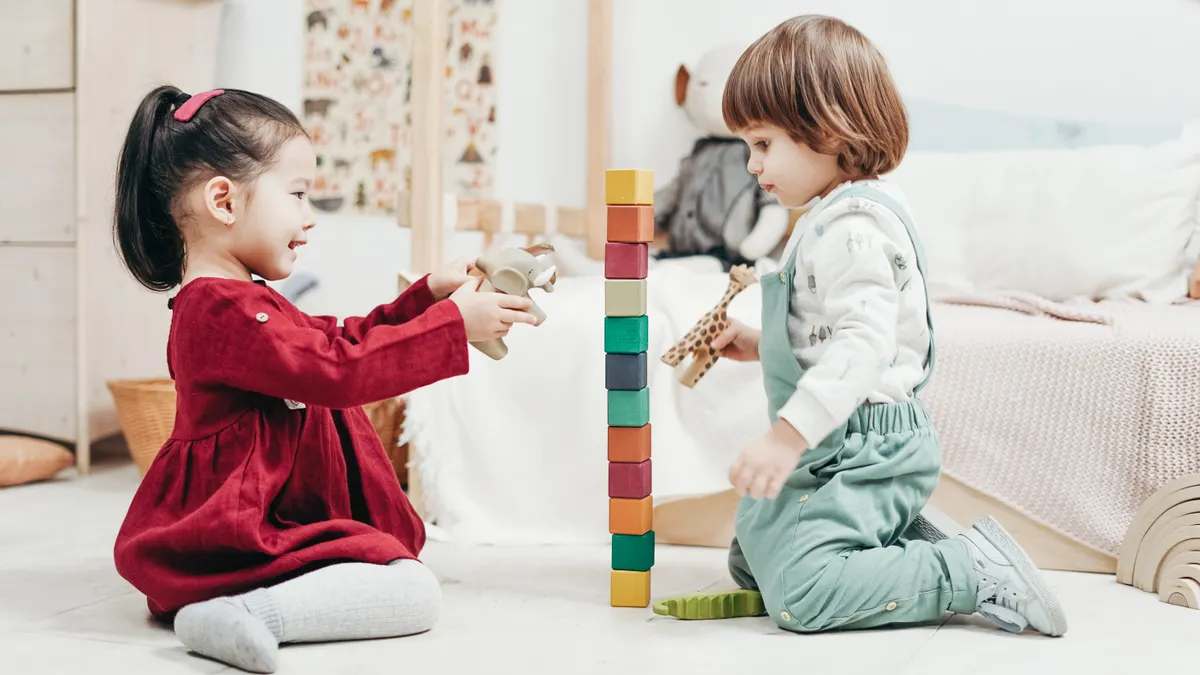
The first Montessori toys I’d look for are pouring sets, object permanence boxes, stacking rings, wooden puzzles, and a small set of practical life tools, because those cover the core toddler skills without cluttering the playroom. That mix gives you variety in action, not variety for its own sake.
A good starter shelf can be built from a few concrete categories:
- Wooden puzzles. Choose simple puzzles with 3 to 6 large pieces or knobbed pieces for easier grasping. The point is matching and placement, not speed.
- Stacking rings. Classic ring stackers teach size order, hand control, and repetition. They are especially useful because the child can correct the placement independently.
- Pouring sets. Two small pitchers, beans, rice, water, or another supervised material let the toddler practice controlled movement. Start with dry materials indoors if you want less mess.
- Object permanence boxes. These toys let a ball or block disappear and reappear, which supports the toddler’s understanding that things still exist when hidden.
- Work trays. A tray keeps a task contained. A tray with a scoop, bowl, and transfer material makes the activity feel complete and keeps cleanup easier.
- Practical life toys. Small brooms, child-sized pitchers, tongs, dressing frames, and spooning tools bring real-life movement into play.
Not every household needs all six categories. In a small home, 2 or 3 well-chosen items can do more than a crowded bin. A toddler who is still mouthing everything may do better with larger, simpler pieces than with a shelf full of tiny parts.
The trade-off is that Montessori toys can look “boring” beside brightly packaged toys. That is the point and the drawback. If a family wants instant novelty, a minimalist toy collection may disappoint. If the goal is longer attention and more independent play, the simpler set usually earns its place.
For a broader look at the category, the hub on educational toddler toys can help place Montessori toys in the bigger picture without turning every purchase into a themed decision.
How do I choose a Montessori toy for my toddler?
Choose a Montessori toy by matching the task, the size, and the level of challenge to what your toddler can do right now, not to what looks impressive on a shelf. The right toy is the one the child can use with some effort and little frustration.
A practical buying process looks like this:
- Start with one skill gap. Pick one aim such as stacking, pouring, sorting, or opening and closing. A single goal keeps the toy focused and increases the chance it will get used regularly.
- Check the piece count. For many toddlers, 3 to 8 parts is enough to teach the skill without turning the activity into a scavenger hunt. More parts can turn into cleanup, not play.
- Match the size to the hand. Pieces should be large enough to grasp with a pincer or whole-hand grip, depending on the task. Tiny parts belong nowhere near a young mouther.
- Look for self-correction. A puzzle, sorter, or box that clearly shows a wrong fit helps the toddler learn without a parent fixing every mistake.
- Choose a material that fits the setting. Wood works well for dry tabletop play. A washable tray or silicone bowl may make more sense for water play or messy practical life activities.
- Limit the extras. Skip toys with sound buttons, character licensing, or add-on games that distract from the main task. The simplest version usually teaches the most.
The best test is to imagine the toy on a low shelf or a work tray. If you can picture the toddler taking it down, using it, and returning it with only a little help, it is probably a strong match.
One common mistake is buying for age alone. Age labels can be useful, but two toddlers of the same age may differ wildly in fine motor control and patience. A 2-year-old who loves transfer work may be ready for a pouring set; another may need more time with nesting cups or large stacking rings first.
Another mistake is confusing “Montessori” with “minimal.” Minimalism is a style. Montessori is a method of use. A toy can be plain and still useless if it does not invite a clear action.
Practical life toys: the part most toy guides miss
Practical life toys are often the most useful Montessori purchase because they turn everyday motions into practice, and they usually cost less than a large themed set. They also build the kind of focus that many flashy toys never touch.
This category includes child-sized pitchers, spoons, tongs, dressing frames, a small broom and dustpan, sponges, and trays for transferring one material from one bowl to another. These are not pretend versions of adult life; they are scaled-down tools for real movement.
Why this matters: toddlers are wired to do what adults do. A practical life toy gives them a safe, repeatable version of that work. Pouring water from a tiny pitcher, wiping a table with a cloth, or carrying a tray across the room asks for concentration, control, and follow-through. Those habits transfer better than another pile of novelty plastic.
This is where a lot of generic toy lists go wrong. They focus on “educational” toys that say they teach letters, colors, or numbers, while skipping the motor and attention work that makes those later lessons easier to absorb. Practical life toys are less showy, but they often stay useful longer because the child can return to them in different moods and skill stages.
There is a trade-off. Practical life toys can be messier than a shape sorter, and some households do not want water or dry goods on the floor at 7 a.m. If cleanup stress is high, choose contained versions first: a tray, two bowls, and a scoop before open water play.
If a family wants only one category to start with, I would make this the one. A small practical life set can cover more daily use than a decorative toy that gets admired once and forgotten.
What should I avoid when buying Montessori toys?
Avoid toys that are overdesigned, fragile, or so open-ended that they have no clear purpose, because those often frustrate toddlers or end up ignored after the novelty wears off. The Montessori label should signal function, not marketing gloss.
Common buying mistakes include:
- Too many functions in one toy. A toy that sorts, lights up, talks, and plays music usually fragments attention. It costs focus, even if it looks like more value.
- Tiny decorative parts. They can create a choking risk for younger toddlers and also make the activity harder than it needs to be.
- Very loud feedback. Music, flashing LEDs, and speech prompts can overwhelm quiet play and reduce independent problem-solving.
- Puzzles with weak fit. If pieces flop around or fit in too many places, the child loses the self-correcting loop that makes the activity useful.
- Shallow “Montessori-inspired” branding. Many products borrow the word but keep the clutter. If the toy feels like a conventional novelty toy in wooden clothing, skip it.
There is also a category I would not buy first: highly aesthetic wooden toys that are beautiful on a shelf but too precious to use freely. A toddler needs to bang, stack, drop, and repeat. If the family is too worried about scuffs, the toy will not function as a toddler tool.
The better choice is the item that can survive being used every day for 15 minutes at a time, then put back on a shelf. That is a more honest measure than whether it photographs well.
Can Montessori toys replace all other toddler toys?
No, Montessori toys should not replace every other toy, because toddlers still benefit from pretend play, movement toys, and open-ended materials that are not strictly Montessori. The point is balance, not purity.
A good play environment can include Montessori toys, dolls, vehicles, blocks, art materials, and outdoor tools. The Montessori pieces handle concentration, independence, and practical life. Other toys handle imagination, gross motor movement, and social play. A toddler does not need a themed room to benefit from Montessori ideas.
The mistake is treating Montessori as a complete replacement plan; if a child has developmental, sensory, or motor concerns, it is wise to consult a pediatrician or pediatric occupational therapist before making major changes. That usually creates either a sterile play space or a parent who feels pressure to buy only one kind of toy. A better approach is to use Montessori toys for the jobs they do well: focused, repeatable, self-correcting activities with a clear endpoint.
If the toy shelf has a 12-piece sound machine, a pile of miscellaneous plastic items, and one useful pouring set, the pouring set may become the most-used item anyway. That is a sign, not a failure. It means the child knows where the real work is.
The verdict is simple: Montessori toys are worth buying when you want fewer distractions, more independent play, and toys that teach through action rather than noise. They are not worth chasing as a brand identity. Choose the task, the material, and the size first.
What are Montessori toys for toddlers?
Montessori toys for toddlers are simple toys designed to help a young child practice one real skill at a time, such as stacking, pouring, fitting, or matching. They usually use wood or other plain materials, avoid excess electronics, and support repetition and independent play.
The first sentence under every product decision should be this: what is the child supposed to do with it? If the answer is clear in one line, the toy may fit the Montessori approach. If the answer needs a marketing paragraph, it probably does not.
What makes a toy Montessori?
A toy is Montessori when its design supports a single, purposeful activity and gives the child room to work independently. That usually means simple materials, a clear task, and built-in self-correction, like a wooden puzzle, stacking rings, or an object permanence box. If it relies on noise or constant adult direction, it is probably not a strong fit.
Are Montessori toys worth it?
Montessori toys are worth it when you want fewer distractions and more focused play that a toddler can repeat on their own. They are less worth it if you want instant novelty or a toy that entertains without much effort.
Drafted with AI; not yet reviewed by a person.