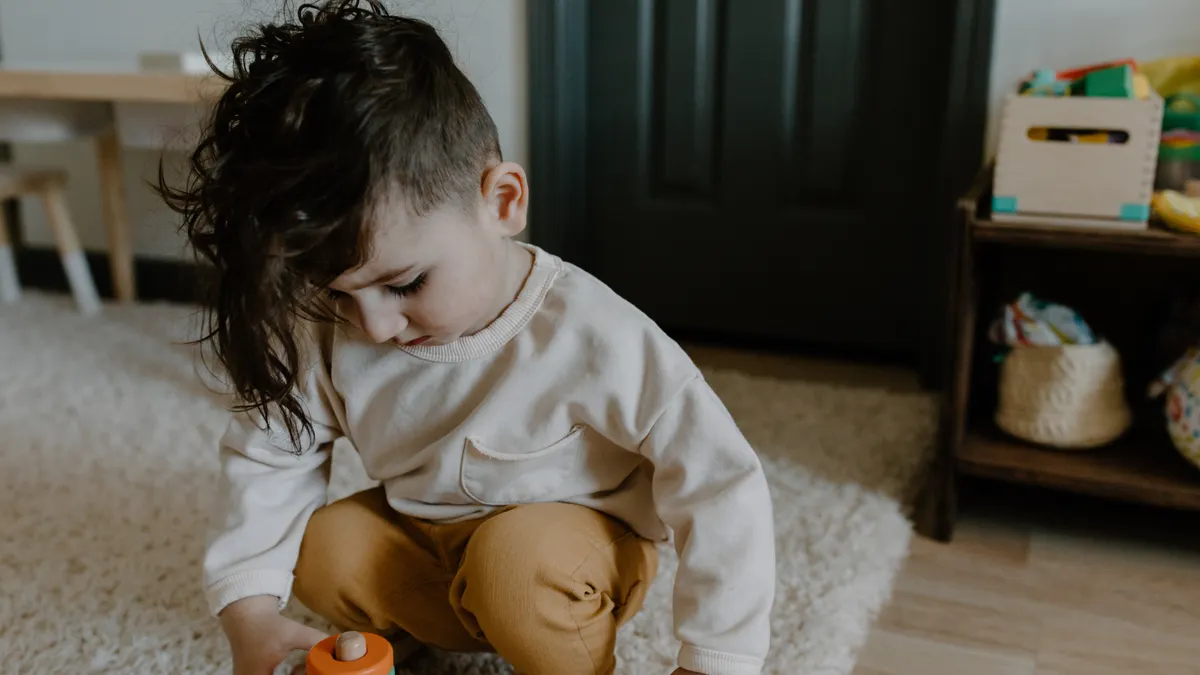
Last updated: November 05, 2026
Quick Answer: for How to Choose Toddler Toys for Apartments with Thin Walls, start with 5 basics—foam mats, soft balls, stacking toys, push toys with rubber or foam wheels, and a washable rug. Apartment toddler toys need three things most toy lists ignore: low noise, low floor impact, and a size that fits real rooms. If the walls are thin, the wrong toy can turn ordinary play into a neighbor problem, so the goal is not “quietest ever” but “play that stays soft, compact, and forgiving on hard floors.”
Key takeaways for apartment-friendly toy shopping
Pick toys that fail softly. A dropped stacking tower on a foam mat is a nuisance; a metal truck on bare laminate is a complaint.
Look for a mix of four categories: foam mats, soft balls, stacking toys, and push toys with rubber or foam wheels. That combination covers movement, fine-motor play, and pretend play without turning every session into a percussion event.
Check the toy’s shape as much as the label. Rounded edges, fabric bodies, and lightweight plastic usually create less wall-vibrating impact than hard wood or hollow metal.
Think about the floor first. If a toy bangs, rolls, or skids, pair it with a washable rug or foam mat before it reaches your toddler’s hands.
Skip toys that only work by being loud, fast, or thrown. They may be fun in a house with a basement. They are poor fits for shared-wall living.
For more background on toy safety standards, see ASTM F963 and the American Academy of Pediatrics guidance on safe play.
What apartment toddler toys have to do differently
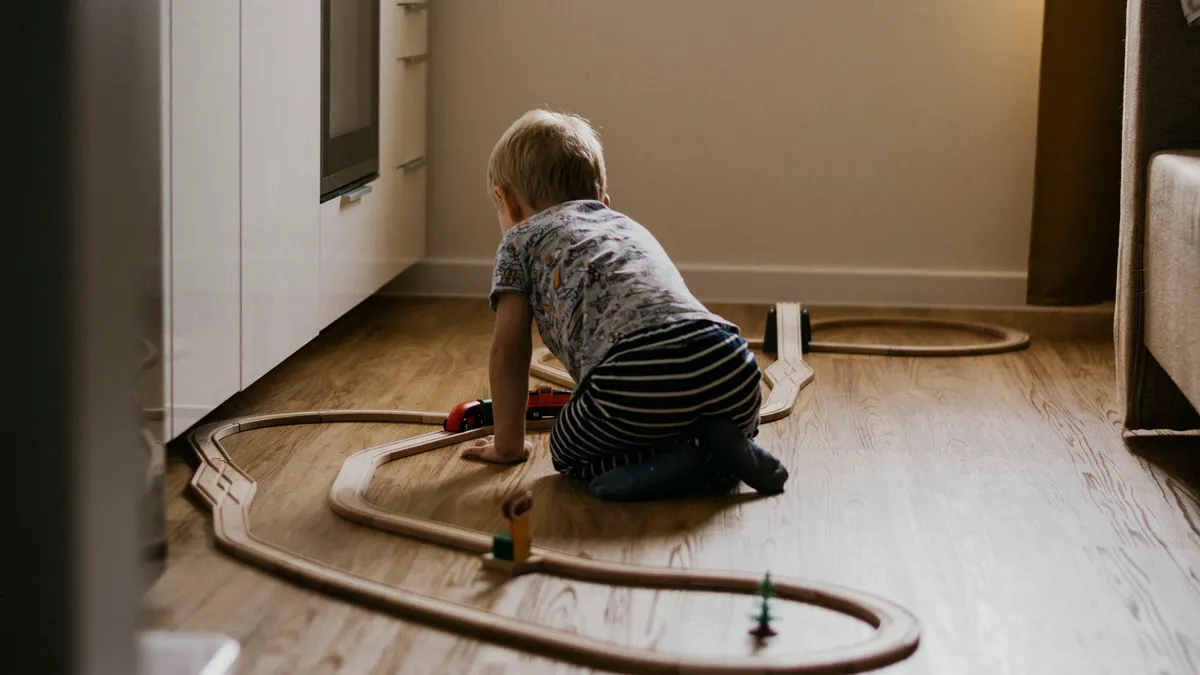
Apartment toddler toys have to reduce sound at the source, not after the fact. That means choosing toys that absorb impact, stay inside a small footprint, and do not invite a lot of throwing, crashing, or long-distance running.
The problem in thin-wall living is not just volume. Low-frequency thumps travel through floors and walls more easily than sharp, brief sounds. A toy that sounds harmless in the room can still carry into the next apartment if it hits a hardwood floor, baseboard, or radiator cover. That is why floor contact matters as much as the toy itself.
A good apartment toy usually has at least one of these traits: soft material, a wider base, a short rolling path, or enough weight to stay put without slamming down. A plush animal, for example, is naturally gentler than a wooden block set. A push toy with rubber wheels is better than one with hard plastic casters. A stacking toy with oversized rings tends to make less noise than a set of small, hard cups that clatter.
This is also where some “classic” toddler toys become poor choices. Drums, xylophones with metal bars, marble runs, heavy wooden pounding benches, and large ride-on toys can all be fine in the right home, but they are wrong for many apartments. They are not bad toys. They are simply high-impact choices for a low-buffer building.
One useful standard to keep in mind is ASTM F963, the U.S. toy safety standard that covers many physical safety aspects of toys. It does not solve noise, but it is still worth checking for age-appropriate construction. For general toy guidance, the American Academy of Pediatrics has useful consumer advice on choosing toys by age and safety; the organization’s HealthyChildren.org site is a reliable place to start.
Because of that, the next question is not just what the toy is, but how it is used in the room. Even a good toy can become a problem if it is paired with the wrong surface.
How do I choose toys that won’t bother the neighbors?
Choose toys that spread force out, stay low to the ground, and can be used on a mat or rug. That combination cuts down the sharp impacts that travel through shared walls and floors.
Start with the sound test in your head: if the toy is dropped from knee height onto laminate, what happens? If the answer is “a loud crack,” “a rolling clatter,” or “a repeatable bang,” it belongs lower on the list. If it lands with a dull thud, it is much better suited to apartment use.
Use this buying order when you shop:
- Check the material first. Choose foam, fabric, silicone, soft plastic, or rubber where you can. The result should be less hard contact with the floor and fewer sharp noises from collisions.
- Look at the toy’s size and weight. Favor toys that are light enough for a toddler to carry but not so tiny that they scatter everywhere. A 6-inch soft ball is easier to manage than a handful of small hard toys that end up under the sofa.
- Check the moving parts. Wheels, lids, rattles, and snap-together parts should move smoothly without a loud click. A push toy with rubber wheels or a chunky stacker usually fits better than a toy with metal axles or hard plastic joints.
- Match the toy to the floor covering. On wood or tile, put the toy on a foam mat or washable rug before play starts. A 4-by-6-foot mat can make a bigger difference than changing the toy brand.
- Limit high-throw games. If a toy’s main appeal is launching, tossing, or slamming, it is the wrong pick for thin walls. A soft ball used for rolling is better than the same ball used for overhand throws indoors.
- Watch the cleanup pattern. Toys that spread into every corner of the room usually create more stomping, dragging, and scraping during pickup. A compact set is easier to keep quiet from start to finish.
The result you want is not silence. It is a play session that stays below the building’s annoyance threshold. That usually means choosing one larger, softer toy over a dozen tiny hard ones.
A common mistake is buying toys that are “developmental” but not apartment-friendly, then hoping a parent can simply supervise the noise away. Supervision helps, but it does not change the physics of a block hitting laminate.
Which toy types work best in shared-wall living?
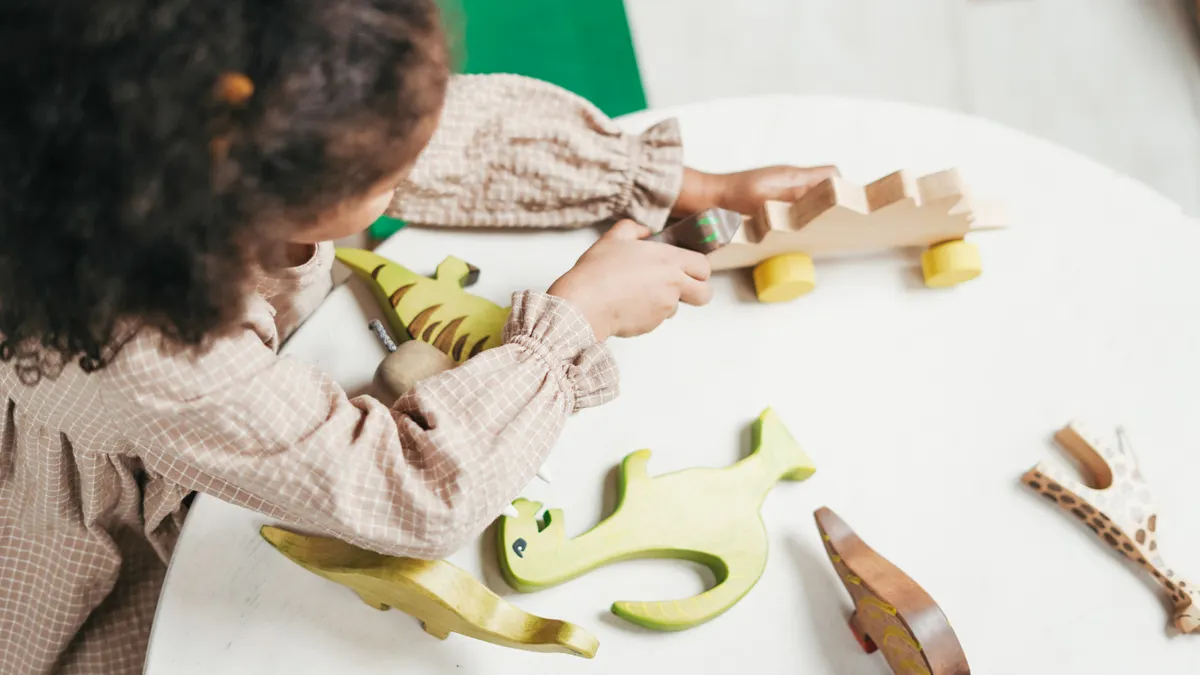
The best toy types for shared-wall living are usually foam mats, soft balls, stacking toys, push toys with soft wheels, and washable rugs used as a play base. These cover movement and manipulation without making the room feel like a drumline.
Foam mats are the easiest floor upgrade. They do not need to cover the whole apartment; even a 2-by-4-foot section under the main play spot can soften dropped toys and knees on the floor. They are especially useful for stacking and pretend play because they turn hard impact into dull impact.
Soft balls are the simplest movement toy for apartments. A fabric-covered ball or plush ball can be rolled, carried, and gently tossed without the same sound profile as a hard plastic ball. They are best for short indoor games, not for repeated kicking down a hallway.
Stacking toys are worth keeping because they give a toddler something to build and knock down without a lot of noise, but the material matters. Oversized foam rings, thick silicone cups, or large lightweight nesting pieces are better than hard wooden towers. If the stacker is designed to topple, make sure it falls onto a soft surface.
Push toys can work if they have quiet wheels and a stable frame. The quieter versions roll forward without the wobble that creates scraping and banging. A push toy with rubberized wheels is more neighbor-friendly than one that clicks across tile. Keep the path short and clear so it does not become a collision toy.
Washable rugs do double duty. They protect the floor and reduce the sound of toy contact. They are also easier to keep clean than loose blankets or quilts, which bunch up and create tripping points.
This is not the category for battery-powered toys that beep, flash, sing, and repeat on a 20-second loop. Those can be fine for occasional use, but they are a poor default in thin-wall apartments.
What should I avoid when buying apartment toddler toys?
Avoid toys that amplify impact, spread fast across the room, or create repeated hard sounds. Those toys cost you in noise, cleanup, and neighbor goodwill.
The biggest offenders are usually obvious once you name the mechanism:
- Hard wooden toys with no soft base: they sound crisp every time they hit the floor. The cost is repeated thumps, especially on tile or laminate. Use a foam mat if you keep them at all.
- Large ride-on toys with hard wheels: they can scrape and vibrate through the floor. The cost is a steady rolling noise that is hard to ignore. Choose rubber wheels or skip the toy.
- Musical toys with loud switches or metal parts: they create sudden peaks in volume that carry through walls. The cost is interruptions for everyone nearby. If the toy must sing, keep the volume setting low and the sessions short.
- Small hard toys that scatter easily: they end up under furniture, and retrieval adds more scraping and banging. The cost is constant floor noise from adults as well as toddlers. Larger pieces are easier to control.
- Throw-focused toys: balls, beanbags, or rings can be fine if they are soft and used carefully, but anything designed mainly for throwing tends to drift toward repeated overhead motion. The cost is ceiling and wall impact when the game gets excited.
One easy rule: if a toy is exciting because it makes a loud sound, it is probably not apartment-friendly. That does not mean it is bad; it means the setting is wrong.
A second mistake is assuming all “soft” toys are quiet. A plush toy with an internal rattle can still be noisy if it contains a hard insert. A foam toy with a hollow cavity can slap harder than expected when dropped. Read the construction, not just the category.
How to set up a quieter play area without buying a whole room
Set up a quieter play area by creating one defined landing zone with a mat, a short toy list, and a hard boundary for throwing. That usually does more than buying extra toys.
A good apartment play zone can fit into a few square feet. You do not need a dedicated playroom to reduce noise. You need a predictable surface and a predictable habit. Put the foam mat or washable rug in one spot and keep the noisiest toys there. That teaches the toddler where loud movement belongs.
Then keep the toy count low enough to stay manageable. The setup is simple:
- one washable rug or foam mat as the base,
- one basket or tray of 4 to 6 toys,
- one soft ball for movement,
- one stacking toy,
- one push toy for short indoor laps.
That small rotation matters. Too many toys create more dropping, more dumping, and more wandering around the apartment. A limited set keeps the play focused and lowers the odds of a toy becoming a projectile.
If the apartment has hard floors, the mat should be the default, not the backup. Put it down before play starts, not after the first complaint from downstairs. If the home has an especially echoey room, a rug with a denser backing will help more than a thin decorative mat.
Keep movement games short and bounded. A 10-minute indoor push-toy session is easier on the building than a long chase game through a hallway. Rolling games are usually better than jumping games because they stay lower to the ground.
This is also where apartment reality matters most. A toy that is tolerable for 5 minutes may be annoying for 45. Choose toys that invite reset, not escalation.
The apartment-friendly buying rule that saves the most regret
Buy the toy only if it still works when you imagine it dropped, rolled, and knocked over on a hard floor. That rule saves more regret than any age label or cute packaging claim.
Age labels tell you whether a toddler can use the toy safely in general. They do not tell you whether it will suit shared-wall living. For an apartment, the better question is: will this toy stay manageable after the first excited throw? If not, the toy will probably become a noise problem.
A solid apartment toy usually passes three checks. It is soft or cushioned enough to survive drops. It is compact enough to stay in one room. It is interesting enough to hold attention without needing sound effects or big movement. If a toy misses two of those three, it is probably wrong for thin walls.
That is the real trade-off: the most apartment-friendly toys are often less dramatic. They may not look as exciting in the store aisle as a flashing truck or a giant pounding bench. But they are the toys you will leave on the floor without dreading the next sound.
If the apartment has especially thin walls, start with the most forgiving basics: foam mats, soft balls, stacking toys, push toys with rubber wheels, and washable rugs. Those are not glamorous choices. They are the ones that keep play possible without making every afternoon feel like a negotiation with the building.
For a broader setup that supports quiet movement and flexible play, the guide to toddler play environment can help frame the whole room, not just the toys in it.
Drafted with AI; not yet reviewed by a person.